
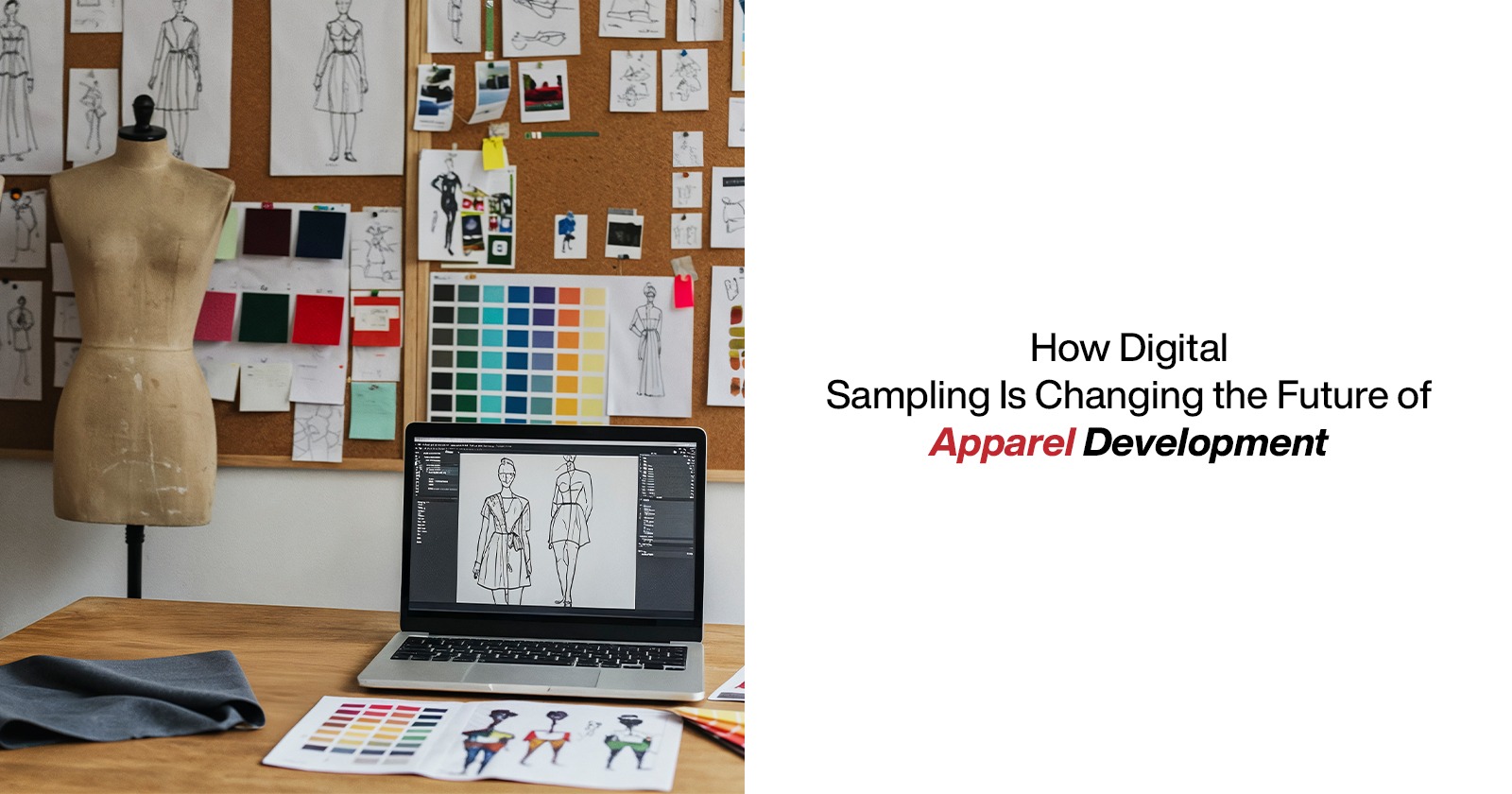
The fashion and clothing business has changed a lot in the last ten years. Brands are quickly embracing new techniques to stay competitive as technology changes how people shop, how long products take to develop, and how long they last. Digital sampling is one of the most revolutionary new technologies that is making this change happen. It substitutes real prototypes with virtual 3D samples.
Digital sampling is not only speeding up manufacturing and lowering costs, but it is also changing the way designers, manufacturers, and merchants sell their goods. As brands put more value on being environmentally friendly and efficient, this technology is becoming more than just a trend; it’s becoming the norm in the industry.
What Is Digital Sampling?
Digital sampling makes realistic models of clothes before they are made by using powerful 3D design software and virtual rendering techniques. These digital prototypes show how the fabric will drape, feel, fit, change colour, and have stitching details, providing designers and other interested parties a good idea of what the final product will look like.
Instead of waiting weeks for tangible samples to be stitched, transported, reviewed, and changed, businesses can now make changes to their designs in minutes on a digital interface. This streamlined approach speeds up the process of making decisions and cuts down on the time it takes to build a product.
How Digital Sampling Is Transforming Apparel Development
1. Faster Time-to-Market
In typical procedures, it can take days or weeks to sample a single piece of clothing many times. Digital sampling speeds up this procedure by a lot:
- Designers change clothes right away.
- Using 3D visualisation, teams check the fit and details.
- Digital platforms that everyone can use get approvals.
Brands can now get new collections to market months faster, which helps them keep up with trends and what customers want.
2. Enhanced Accuracy and Fewer Production Errors
Digital tools can perfectly mimic how fabric behaves. These 3D models show exactly how the clothes will look when worn, which helps teams find problems early:
- Measurements that are wrong
- Not a good fit
- Mismatch of fabric
- Mistakes in stitching
Manufacturers may avoid expensive mistakes and make products more reliable by finding problems before they go into production.
3. Reduced Sampling Costs
Samples in the real world need labour, materials, transportation, and time, all of which are big costs. Digital sampling cuts down on or even gets rid of:
- Waste of fabric
- Costs of rework
- Costs of transporting prototypes
Brands who use 3D sample generally say that their sampling costs are 50% to 70% cheaper, making it a good choice for businesses of all sizes.
4. Improved Collaboration Across Global Teams
Digital platforms let teams work together from anywhere in the world. Designers, production managers, and marketing teams can all see the same virtual sample, give comments right away, and finish designs without any problems.
This kind of connectedness enables multinational clothing companies be consistent and efficient across continents without having to deal with the problems of foreign shipping or time zones.
5. Greater Creative Freedom for Designers
Digital technologies give designers the freedom to try out new ideas without any limits:
- Trying out different shapes
- Looking into more complex patterns
- Testing out a lot of colours right away
- Playing around with different fabric simulations
Being able to quickly see and change designs fosters creativity while making sure they are useful. In the end, designers can push the limits while still making money.
6. Supporting Sustainability Goals
The fashion industry is under a lot of pressure to use eco-friendly methods. Digital sampling helps lessen the damage to the environment in a number of ways:
- Less fabric waste comes from fewer actual samples.
- Less shipping implies less carbon pollution.
- Good designs cut down on waste after production.
Brands that use digital sampling have an edge over their competitors because they meet consumers’ growing expectations for sustainability.
7. Transforming Marketing and Sales
Digital samples are utilised for more than only internal development; they are also employed in marketing and e-commerce. You can have virtual samples that are
- Used to list products online before they are made
- Built into tools for trying things on online
- In 3D showrooms
- Made for brand promotions and catalogues
This lets firms start marketing sooner, see how interested customers are, and lower the danger of having too much stock.
Why Digital Sampling Matters for the Future
As AI, virtual reality, and automation get better, digital sampling will probably become increasingly more a part of the whole process of making clothes. Companies who adopt these technologies early will be better off in the long run in a market that relies more and more on speed, innovation, and sustainability.
TexNex Inc: Powering Apparel Innovation Across the Americas
Before conclusion, it’s crucial to underline the role of industry leaders pushing this shift. TexNex Inc is the official agent for North and South America. They help clothing companies looking for modern solutions grow their operations, get more customers, and make their supply chains work better.
TexNex Inc works with the best cloth makers in Pakistan, who are known for their skill, high-quality production, and low costs, to make sure that every product satisfies the highest international standards for quality, innovation, and sustainability. They are a crucial partner for businesses that are using digital sampling and next-generation products since they know a lot about digital transformation, sophisticated manufacturing processes, and making clothes across borders.
TexNex Inc is speeding up the move towards a more efficient, eco-friendly, and technology-driven future for clothing by putting a lot of emphasis on raising production standards and developing worldwide relationships.
Conclusion
Digital sampling is not only making clothing design better; it’s changing the way it works. This technology is changing what is possible in fashion by speeding up workflows, cutting down on waste, making things more accurate, and making it easier for people all around the world to work together. As the business changes, companies that use digital solutions will stand out because they are flexible, environmentally friendly, and creative.
And with partners like TexNex Inc at the forefront of developing new clothing, brands all over the Americas are more ready than ever to do well in a future driven by technology.
FAQs
1. Is digital sampling suitable for all types of garments?
Yes. Digital sampling can accurately copy a wide range of textiles and design details, from everyday clothes to technical clothing to high-end fashion.
2. Can digital samples completely replace physical samples?
Digital samples can cut down on the need for real prototypes by a lot. Some physical samples may still be needed for final approval or testing of materials, though.
3. Is digital sampling expensive to adopt?
You have to spend money on software and training at first, but the long-term benefits from lower sampling costs, faster output, and fewer mistakes make it very cost-effective.
Summary
Digital sampling is transforming apparel development by expediting manufacturing, decreasing waste, ensuring design accuracy, and promoting sustainability. With innovators like TexNex Inc partnering with leading manufacturers and driving innovation across the Americas, the future of fashion is becoming more efficient, creative, and technology-driven than ever before.