
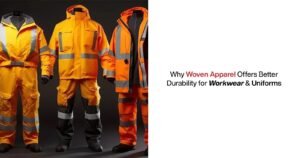
Durability is not a luxury when it comes to work clothes and uniforms; it is a must. Industries including manufacturing, construction, healthcare, logistics, and hospitality need clothes that can handle everyday use, frequent cleaning, and tough conditions without compromising their function or look. Woven clothing is always the best choice for long-lasting work clothes and uniforms, even if there are many other types of fabric available nowadays.
This article talks about why woven textiles last longer, how they hold up in tough situations, and why they are the most popular option for professional uniforms throughout the globe.
Understanding Woven Apparel
Two different sets of yarns—warp (lengthwise) and weft (crosswise)—are woven together at right angles to make woven textiles. This rigid design makes the fabric sturdy, with little flexibility and a strong feel in the touch. Twill, canvas, poplin, oxford, and denim are among common woven textiles used in workwear.
Knitted textiles are constructed from looping yarns and are more likely to stretch. Woven fabrics, on the other hand, focus on strength, shape retention, and resistance to abrasion, which are all important qualities for uniforms and industrial clothing.
1. Superior Structural Strength
The structural integrity of woven clothing is one of the main reasons it lasts longer. The strands are tightly woven together, which spreads the tension equally throughout the fabric surface. Woven textiles are less likely to stretch or rip when they are pulled, rubbed, or put under stress than knits.
Woven clothing is great for work since it can bend, lift, and move all the time and come into touch with machines or harsh surfaces. Over time, the fabric keeps its original shape, which makes clothes last longer and work the same way every time.
2. Higher Resistance to Wear and Tear
Work clothes get a lot of wear and tear from rubbing against tools, equipment, furniture, and even other clothes. Woven textiles, particularly those with twill or canvas weaves, don’t wear out easily. The tight yarn structure keeps the surface from becoming damaged and prevents it from getting too thin or having holes.
This ability to withstand wear and tear is especially useful for uniforms used in factories, warehouses, and outdoor work sites, where clothes are exposed to tough circumstances every day.
3. Better Shape and Fit Retention
Uniforms need to look professional for as long as they are worn. Woven clothes hold their form well, so they are less likely to stretch out, droop, or lose their precise fit over time.
Woven textiles keep crisp lines, rigid shapes, and constant sizes since they don’t stretch much until elastane is added. This is particularly crucial for uniforms for businesses, security guards, and hospitality workers, since how you look directly affects how others see your company.
4. Enhanced Performance in Industrial Laundering
Work clothes and uniforms are cleaned a lot, and the washing machines are routinely set at high temperatures and use industrial methods. Woven textiles can handle being washed, dried, and pressed over and over again without falling apart.
Because their strands are securely linked, they don’t pill, break down, or distort seams. Because of this, woven uniforms keep their color, texture, and strength even after dozens or hundreds of washes. This means they don’t need to be replaced as often, which lowers the total cost of uniforms.
5. Greater Protection and Functional Reliability
In many professional settings, clothes need to protect the body in some way. Woven clothes are better at keeping out wind, dust, small scratches, and exposure to the environment. Finishes that make materials flame-resistant, water-repellent, or chemical-resistant may also be used on heavier woven fabrics.
Woven workwear is especially useful in industries like construction, oil and gas, utilities, and manufacturing, where worker safety and garment dependability are very important.
6. Customization and Industrial Compatibility
Woven textiles work very well with the procedures used to make clothes in factories. They work well for cutting, sewing, embroidering, and printing. Logos, name tags, and insignia stick better to woven surfaces, keeping their edges sharp and lasting longer.
Woven clothing also allows for more complicated garment design, such reinforced seams, pockets, pleats, and panels, without making the fabric less stable. This lets companies and brands make uniforms that are useful for certain jobs.
7. Cost-Effectiveness Over the Long Term
Woven clothing may cost more at first than lightweight knits, but it is worth more over time. For companies that run big uniform programs, longer garment lifespans, fewer replacement cycles, and fewer maintenance problems all add up to real cost savings.
From a buying point of view, durability has a direct effect on return on investment, thus woven workwear is the better option for the long run.
Why Sourcing Matters in Woven Workwear
The kind of fabric used to make woven clothing isn’t the only thing that affects how long it lasts. Sourcing, production standards, and quality control are all quite important. The quality of the yarn, the density of the weave, the finishing procedures, and the sewing methods all affect how well the finished garment works.
This is why it’s important to have the correct partner for production and sourcing.
Before You Choose Your Manufacturing Partner
TexNex Inc is a unique and open sourcing methodology for companies and customers that want to find durable woven workwear and uniforms.
TexNex Inc helps people in North and South America find trustworthy manufacturers in Pakistan. The firm is based in Canada and operates without charging a fee, which keeps costs down and gives clients direct access to verified production partners.
TexNex Inc. helps companies get high-quality woven workwear without extra costs by cutting out intermediaries and concentrating on ethical, quality-driven production. This makes it simpler to achieve durability, uniformity, and scalability.
Frequently Asked Questions (FAQs)
1. Are woven fabrics always better than knits for workwear?
Woven textiles are usually superior for lasting longer, resisting wear and tear, and keeping their form. But knits could be better for jobs that need a lot of elasticity and comfort, like light-duty or leisure clothes. Woven textiles are usually better for heavy-duty and professional work clothes.
2. Which woven fabric is best for industrial uniforms?
Twill and canvas weaves are two of the most common types of fabric for industrial uniforms because they are strong, resistant to wear and tear, and last a long time. The ideal option depends on the task, the weather, and how much protection is required.
3. Do woven uniforms require special care?
No. Woven uniforms are made to be washed often and in industrial settings. Following the basic care guidelines, such washing at the right temperature and staying away from harsh chemicals, may help clothes last longer.
Summary
Woven clothes are the best choice for workplace and uniforms since they are made of robust fabric that doesn’t wear out easily, keeps its shape better, and can handle industrial washing. Because of these traits, woven textiles are the best option in tough sectors where performance, safety, and a professional look are important.
Woven workwear may be a long-term investment instead of a recurrent cost when you find the correct sourcing partner and make it using high-quality materials. This gives both employers and brands stability, consistency, and value.