
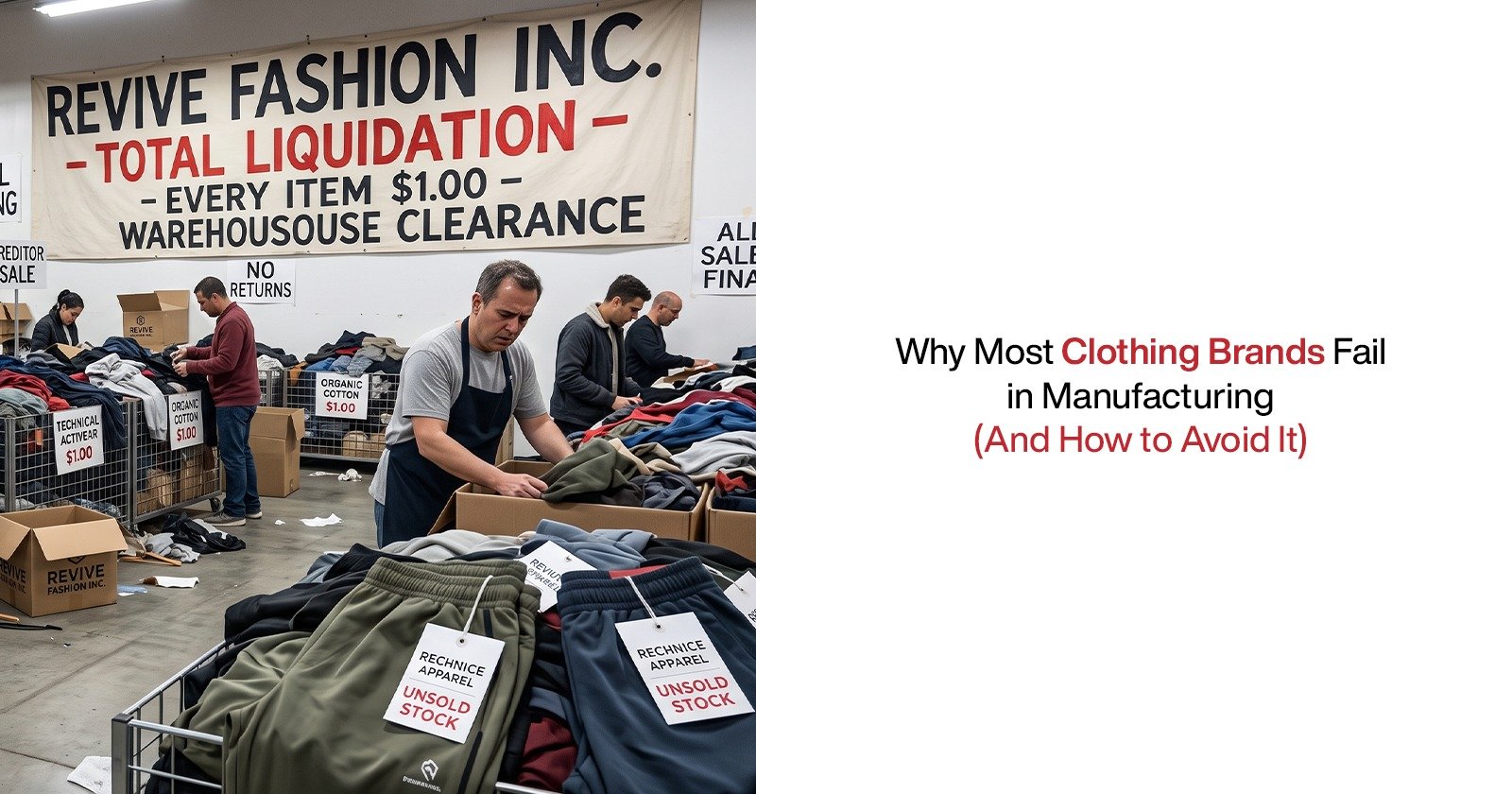
Starting a clothing brand has never been easier. With the rise of eCommerce platforms, social media marketing, and global sourcing, thousands of entrepreneurs enter the fashion industry each year. Creating a brand can be easy but successfully producing products is one of the biggest challenges. The reason so many promising clothing brands fail isn’t because they have bad marketing or weak designs. They fail because they can’t build a reliable manufacturing process.
Manufacturing directly impacts product quality, customer satisfaction, delivery timelines, profitability and brand reputation. A single mistake made during production can lead to delayed launches, excessive returns, unhappy customers, and significant financial losses. The first step to building a sustainable fashion business is to understand why clothing brands fail at manufacturing.
In this guide, we’ll cover the most common manufacturing mistakes and practical tips on how to avoid them, helping clothing brands create better products while building long-term partnerships with reliable manufacturers.
1. Choosing the Wrong Manufacturing Partner
One of the biggest reasons that clothing brands fail is choosing clothing manufacturers based on the cheapest price. Lowering production costs may appear to be attractive in the early stages, but very low prices often lead to a decrease in quality, communication or consistency of production.
Some manufacturers promise too much in negotiations but don’t deliver once production starts. Others have no modern equipment, no skilled workers or quality control systems. This means that the garments are not the same as the approved samples, which in turn leads to disappointment for both brands and consumers.
When searching for clothing businesses, they should examine manufacturing experience, production capacity, quality assurance processes, certifications, communication standards, and past client work instead of just pricing. A good manufacturer becomes a long-term business partner, not just a supplier.
2. Poor Product Development Before Production
Many startups go straight into mass production without having fully developed their products. Instead of a full technical specification, they will use sketches, rough ideas or inspiration from the Internet.
Manufacturers require detailed information such as measurements, fabric composition, stitching methods, trims, labels, printing techniques, embroidery details, packaging requirements, and grading specifications. Lack of information makes manufacturers make assumptions and production mistakes happen more than you would think.
Taking the time to create accurate tech packs, prototypes and sample approvals significantly reduces the risks involved in production and ensures both parties know exactly what is expected.
3. Ignoring Fabric Quality
Fabric is what makes a garment look, feel, perform and last. Unfortunately, many brands put a lot of effort into branding, and little effort into the selection of textiles.
Fabric quality matters. Cheap fabrics may shrink, fade, pill, have poor stretch recovery, bleed color, or feel uncomfortable. These issues quickly destroy customer trust and increase return rates.
Successful brands don’t put production orders through without first testing the fabrics. They look at things like durability, GSM, composition, wash performance, colourfastness, breathability and the suitability for their target market. Premium materials may add a little to the manufacturing cost, but often translate to better customer satisfaction and more repeat business.
4. Weak Communication Throughout Production
Manufacturing is a collaborative effort. Brands and factories must have constant communication from sample development through shipment.
Brands often make the mistake of providing incomplete instructions or assuming that the manufacturers understand what is expected of them. Such difficulties can be further compounded by time zone differences, language barriers and inconsistent follow-ups.
Written specifications, production timelines, approval checkpoints, quality standards and regular production updates are clear communication. Good communication more often can uncover potential problems before they become expensive mistakes.
5. Unrealistic Production Timelines
Many new clothing businesses are unaware of the time it takes in order to make good quality clothes.
Production includes the sourcing of materials, development of samples, revision approvals, trim purchasing, fabric cutting, sewing, quality inspections, finishing, packaging and shipping. Any delay at any stage affects the entire schedule.
Brands that promise unrealistic launch dates often have rushed manufacturing and compromised quality. By setting achievable production timelines, manufacturers can emphasize consistency over speed.
If you plan your collections a few months ahead, your production will be so much better.
6. Lack of Quality Control
Quality control should not be looked upon as an optional cost. But many small brands only check products once shipments arrive.
Professional manufacturers conduct quality checks throughout the production process, not waiting until garments are finished. Inspections of the fabric, verification of measurements, evaluations of stitching, accuracy of print, inspections of packaging and final random checks all help to maintain consistent standards.
Before production, brands should set quality requirements that can be measured and make sure that inspections are carried out at different stages of the production process.
7. Ordering Quantities Without Proper Planning
Some companies buy too much of a product because they believe it will reduce their production costs. Others make very small quantities, which raises the cost per unit.
But either way, you’re in trouble financially.
Overproduction means that valuable cash is tied up in inventory that may take months to sell. Underproduction can lead to stock outs, higher production costs and lost sales.
Effective brands determine production levels after forecasting demand using market research, historical sales figures, seasonal trends, and customer tastes.
8. Failing to Build Long-Term Manufacturer Relationships
Brands are always changing manufacturers to get cheaper prices. Lower costs may seem appealing at first, but the constant switching of production partners creates inconsistency.
Each manufacturer has their own processes, equipment, quality standards and production techniques. Constantly changing suppliers can lead to inconsistent sizing, fabric quality and production delays.
Building a long-term relationship with a trusted manufacturer leads to better pricing, priority scheduling, better communication and better production consistency over time.
9. Not Understanding Manufacturing Costs
Some entrepreneurs only focus on garment production costs, ignoring the whole cost structure.
The cost of manufacturing includes sampling, pattern making, grading, sourcing of fabrics, trims, labels, packaging, quality checks, shipping, customs duties and warehousing.
Getting these costs wrong can lead to lower profit margins or unexpected financial losses.
A complete cost analysis will enable a brand to price products competitively and still make a profit.
10. Overlooking Compliance and Ethical Manufacturing
Modern consumers increasingly care about where and how clothing is made. Brands that don’t follow ethical manufacturing practices risk hurting their reputation.
Collaborating with factories that respect safe working conditions, fair labor practices, environmental responsibility, and regulatory compliance enhances brand credibility and reduces operational risks.
Responsible manufacturing is now a competitive advantage, not a moral obligation.
11. Investing Too Little in Sampling
Most of the new clothing businesses don’t want to pay the money for sampling. But if you don’t sample correctly, you can make costly mistakes in mass production.
Every sample gives you a chance to assess fit, construction, materials, stitching quality, branding elements and customer appeal before you get into large production runs.
Several revisions of the sample may seem expensive, but they are much cheaper than fixing thousands of defective garments after they are produced.
How Successful Clothing Brands Avoid Manufacturing Failure
There are a few things that successful manufacturing brands have in common. They invest heavily in product development, communicate well with manufacturers, set realistic production schedules, are constantly inspecting quality, understand production costs and build long term manufacturing partnerships.
They look for the cheapest factory, but focus on reliability, transparency, consistency and expertise. These companies know that manufacturing excellence translates directly into customer satisfaction, great reviews and sustainable growth.
Manufacturing is a strategic business function, not just an operational necessity, according to a good clothing brand.
Why TexNex Inc Is a Smart Manufacturing Partner
The right manufacturing partner can make the difference between a struggling clothing business and a successful global brand. TexNex Inc. makes this process easier by linking reliable manufacturers in Pakistan with apparel buyers throughout North and South America. TexNex Inc. is a Canada based company dedicated to building trusted sourcing relationships based on quality, transparency and effective communication.
A big advantage of the company is its zero-commission model, which allows buyers to work directly with manufacturers without having to pay any extra commission fees. This approach allows brands to reduce sourcing costs, while still having access to experienced production facilities that can produce a wide variety of apparel products. TexNex Inc is a trusted connection for international buyers and qualified manufacturers if you are launching a new clothing label or growing an established fashion business.
Concusion
Manufacturing remains one of the most crucial pillars of any successful clothing brand. Great marketing and creative designs can’t make up for poor production quality, unreliable suppliers or inconsistent manufacturing processes.
Brands that do the careful planning, detailed product development, quality assurance, set realistic timelines and partner with trusted manufacturers are in a much better position for long-term success. Preventing common manufacturing errors not only protects your investment, but also builds customer confidence and establishes a strong reputation in an increasingly competitive fashion market.
Frequently Asked Questions
FAQ 1: Why is it so hard for new clothing brands to get their clothes made?
Most new clothing brands fail because they have no experience in manufacturing, they choose their suppliers based on price only, they do not sample properly, and they do not set clear production specifications and quality standards.
FAQ 2: How do I find a good clothing manufacturer?
Look for manufacturers with demonstrated industry experience, good communication, consistent quality control processes, positive client references, ethical production practices and the ability to produce samples prior to bulk manufacturing.
FAQ 3: Is manufacturing in Pakistan a good option for apparel brands?
Yes. Pakistan is one of the world’s major producers of textiles and apparel. With experienced manufacturers, competitive prices, high quality fabrics, skilled labor and strong export capabilities, it is an attractive sourcing destination for clothing brands around the world.
Summary
The majority of fashion brands fail at manufacturing because they select unreliable factories, neglect quality control, communicate poorly, rush production, neglect proper sampling and don’t build long-term relationships with suppliers. Fashion brands can reduce production risks, improve product consistency, and build a profitable, sustainable business by focusing on strategic manufacturing decisions, investing in quality, and partnering with experienced organizations such as TexNex Inc.