
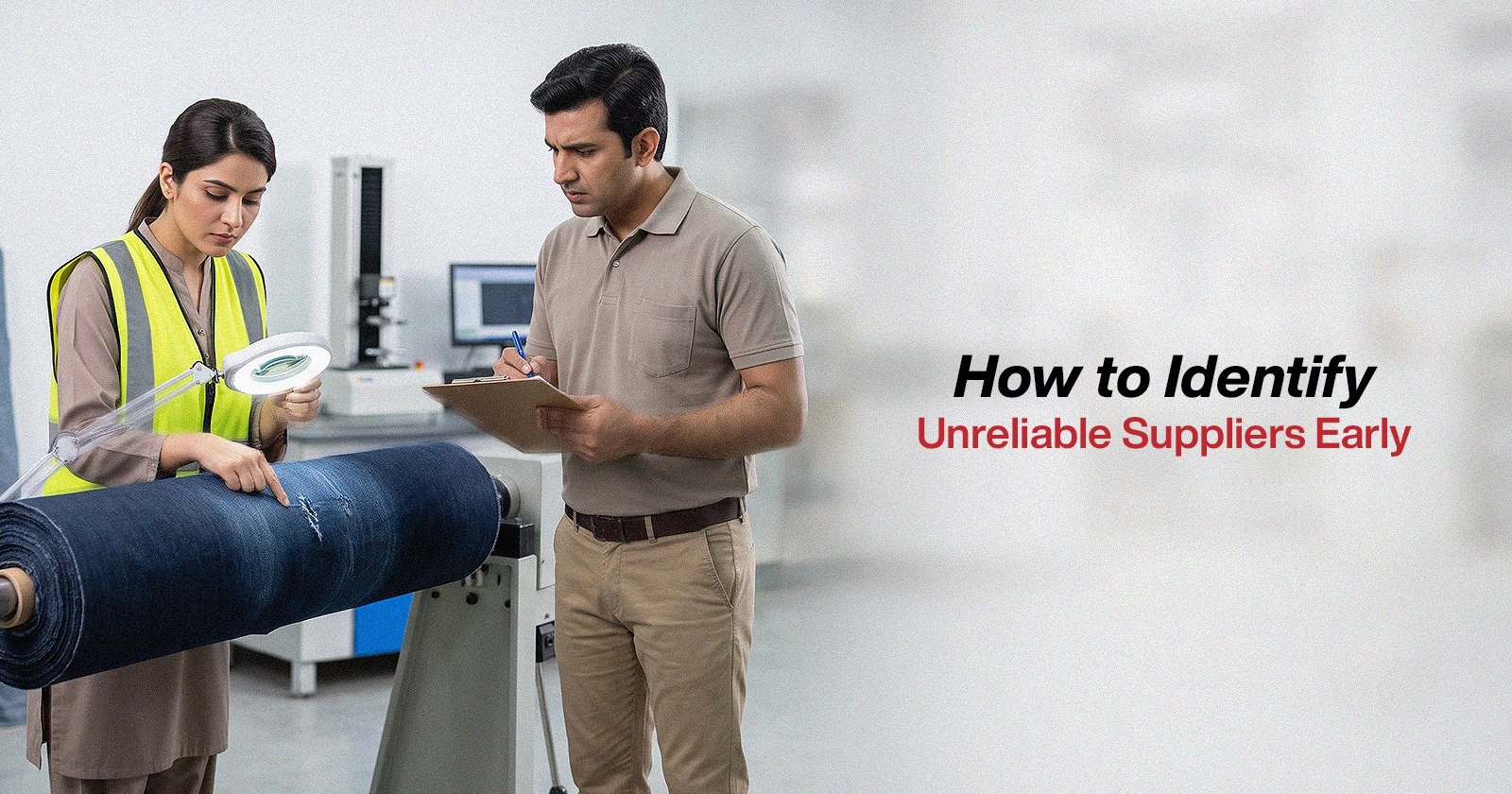
One of the most important decisions any business can make is finding the right supplier. For sourcing apparel, home textiles, sportswear or industrial fabrics, your supplier directly influences product quality, delivery times, customer satisfaction and profit margins. Unfortunately, most companies only learn about supplier problems after production has started, causing late shipments, inconsistent quality, lost revenue, and damaged business relationships.
The good news is that dodgy suppliers usually give warning signs long before they become a serious problem. Buyers who know how to spot these red flags early can protect their investments and establish long-term relationships with trustworthy manufacturers.
In this guide, you will learn how to identify unreliable suppliers before placing large orders, as well as the evaluation methods experienced buyers use to reduce sourcing risks.
Why Supplier Selection Matters
A supplier is not just a manufacturer. They grow into an extension of your business. Every shipment they make is your brand’s representation to your customers.
The wrong supplier can lead to poor workmanship, defective products, delivery delays, hidden costs and communication breakdowns. These problems not only increase operating costs but also erode customer confidence and make it harder to grow the business in future.
By contrast, reliable suppliers always deliver quality products, communicate transparently, solve problems proactively and help buyers scale with confidence.
1. Look Beyond Attractive Pricing
One of the first warning signs is too low pricing.
While competitive prices are always attractive, quotes that are far below market rates often mean compromises somewhere in the production process. This may mean using cheaper raw materials, using less experienced labour, using old equipment, or adding hidden fees down the line.
Professional suppliers price based on realistic costs of production. Buyers should consider overall value and not just the lowest price. This includes quality, consistency, lead times and after-sales support.
2. Evaluate Communication Quality
The way a supplier communicates is often indicative of how they’ll perform throughout the partnership.
Good suppliers answer technical questions clearly, reply professionally, and are transparent about their production schedules, material sourcing, and pricing.
An unreliable supplier will often avoid direct questions, give vague answers, keep changing information or take an excessive amount of time to respond.
See how quickly they respond to your emails, if they understand your product needs and how often they reach out to you without you chasing them.
Communication during negotiations is often bad, and it gets worse after an order goes in.
3. Verify Business Credentials
Don’t just take the company’s website or online profile.
Your business registration, manufacturing licenses, export certifications, tax documentation and factory information will be checked by professional buyers before they move forward.
Ask suppliers for company registration documents, certifications that are relevant to your industry, and references from existing international customers.
Generally, a legitimate manufacturer won’t have a problem sharing these documents.
If a supplier refuses to respond to verification requests or repeatedly delays in providing documentation, that’s a big red flag.
4. Assess Manufacturing Experience
Not all factories have experience in the production of all types of textile products.
Some manufacturers specialise in knitwear, others in woven garments, workwear, sportswear or home textiles.
Ask detailed questions about previous production experience, machinery, production capacity, quality control systems and export destinations.
A good supplier should be able to talk confidently about production methods, fabric choices, compliance regulations and production constraints.
Often suppliers lacking the relevant expertise make unrealistic promises that are later impossible to be met.
5. Request Product Samples
Samples are a good way to get a feel for a supplier’s capabilities before you commit to full-scale production.
Check the stitching, fabric, measurements, finishings, labels, packaging, and general workmanship.
Professional manufacturers maintain quality for samples and production.
If the sample is obviously defective, badly finished or has inconsistent specifications there is little reason to expect better performance in mass production.
Don’t skip sample approval to save time.
6. Review Production Capacity
Some suppliers will take your order even if they cannot physically make the product.
This often leads to late deliveries, undisclosed subcontracting, inconsistent quality, and rushed production.
Discuss the monthly production capacity, average lead times, workforce, machinery and current workload.
Good suppliers will give you realistic timelines, and not promise the moon if it means getting your order.
7. Watch for Unrealistic Promises
Watch out for any supplier who claims he can do everything, deliver anything, be the cheapest and be guaranteed for quality all at the same time.
There are always practical limits to manufacturing.
The professional vendors openly talk about possible issues, material availability, production time frames and possible risks.
Overpromising is often a sign of inexperience or dishonesty.
Long-term partners are more likely to be reliable if they communicate realistic expectations.
8. Examine Quality Control Procedures
Quality assurance is what separates the good manufacturers from the bad ones.
Ask suppliers about stages of inspection during production.
Professional factory normally do incoming material inspection, in-process quality check, final inspection and packaging check before shipment.
Ask for photographs or documentation of their quality management process.
If there isn’t a system of quality control, there’s a higher possibility of a supplier sending you faulty products.
9. Research Customer Reputation
Past customer experiences often tell you things that marketing materials can not.
Look for client testimonials, export history, long term partnerships and industry references.
Where possible, ask current buyers about communication, consistency, delivery performance and problem resolution.
Reliable suppliers are in it for the long haul, consistently meeting expectations through multiple production cycles.
One bad review might not be enough to cut a vendor loose, but several accounts of delays, quality problems or bad communication should be considered seriously.
10. Evaluate Financial Stability
Suppliers that are financially unstable may find it difficult to purchase raw materials, pay employees or make production schedules.
Red flags – repeated requests for large advance payments, frequent alterations to payment terms or clear indications of operational instability.
Professional manufacturers have transparent payment structures and confidence in their business operations.
Financial strength plays a big role in consistent production and long term reliability.
11. Inspect the Factory Whenever Possible
Factory visits are one of the most accurate ways to assess supplier reliability.
An on-site inspection allows buyers to examine production equipment, cleanliness, workforce organisation, inventory management, safety standards and quality control procedures.
If you cannot visit in person, then hire an independent inspection company to audit the factory prior to placing large production orders.
Seeing real manufacturing processes often confirms whether the supplier really lives up to its statements.
12. Evaluate Their Supply Chain
Trustworthy manufacturers usually have steady relationships with fabric mills, accessory suppliers, dyeing units and logistics partners.
Inquire about the source of raw materials, and alternative sourcing options during supply disruptions.
Suppliers with varied sourcing networks are better equipped to handle unexpected shortages and production difficulties.
A good supply chain management improves reliability and reduces the risk of delivery.
13. Start with Smaller Orders
Even if you have done your due diligence don’t go and order a huge amount the first time you deal with a new supplier.
Begin with a small production run.
This lets you assess communication, product quality, packaging, shipping performance, documentation accuracy and responsiveness before you shell out a lot of money.
The successful trial orders give confidence for larger future partnerships.
How TexNex Inc Helps Buyers Source with Confidence
This can be a long process especially when you are sourcing textile manufacturers from all over the world. TexNex Inc has facilitated easy communication for buyers in North America and South America to connect with reliable manufacturers in Pakistan. TexNex Inc. is a Canada-based company that carefully links international buyers with experienced production partners who can provide high quality textile products in a variety of categories. Unlike traditional sourcing companies, TexNex Inc operates with zero commission, which enables buyers to establish direct, transparent, and cost-effective relationships with manufacturers, while mitigating sourcing risks and enhancing supply chain efficiency.
Conclusion
It’s a lot less expensive to weed out unreliable suppliers early than to have to deal with production failures after orders have been placed. Choosing reliable manufacturing partners comes down to thorough research, careful verification, effective communication, sample evaluation, factory inspections, and realistic expectations.
By spending time evaluating suppliers, companies build stronger supply chains, reduce operational risks, improve product consistency and build long-term business relationships. Successful buyers are looking for reliability, transparency and proven manufacturing capabilities, not necessarily the lowest prices.
Frequently Asked Questions
1. How do I check a textile supplier’s credentials?
Ask for business registration documents, export licenses, factory information, client references and production samples. Independent factory audits and third-party inspections can also be used for verification.
2. What is the most serious warning sign when choosing a supplier?
The first warning sign is often poor communication. Suppliers who do not answer questions, give conflicting information, or always miss deadlines during initial discussions can lead to much bigger problems in production.
3. Is it a good idea to place a large first order with a new supplier?
No. It’s always better to start with a smaller trial order. This allows you to assess quality, communication, production timelines and reliability before you sign larger manufacturing contracts.
Summary
To ensure product quality, brand protection and business continuity, it is important to select reliable suppliers. Buyers can filter unreliable suppliers before they become expensive issues by checking credentials, assessing manufacturing capabilities, reviewing quality control systems, asking for samples, and evaluating communication practices. By working with experienced sourcing partners such as TexNex Inc., the risk is further minimized as they match international buyers with trusted manufacturers and simplify the whole process of global textile sourcing.