
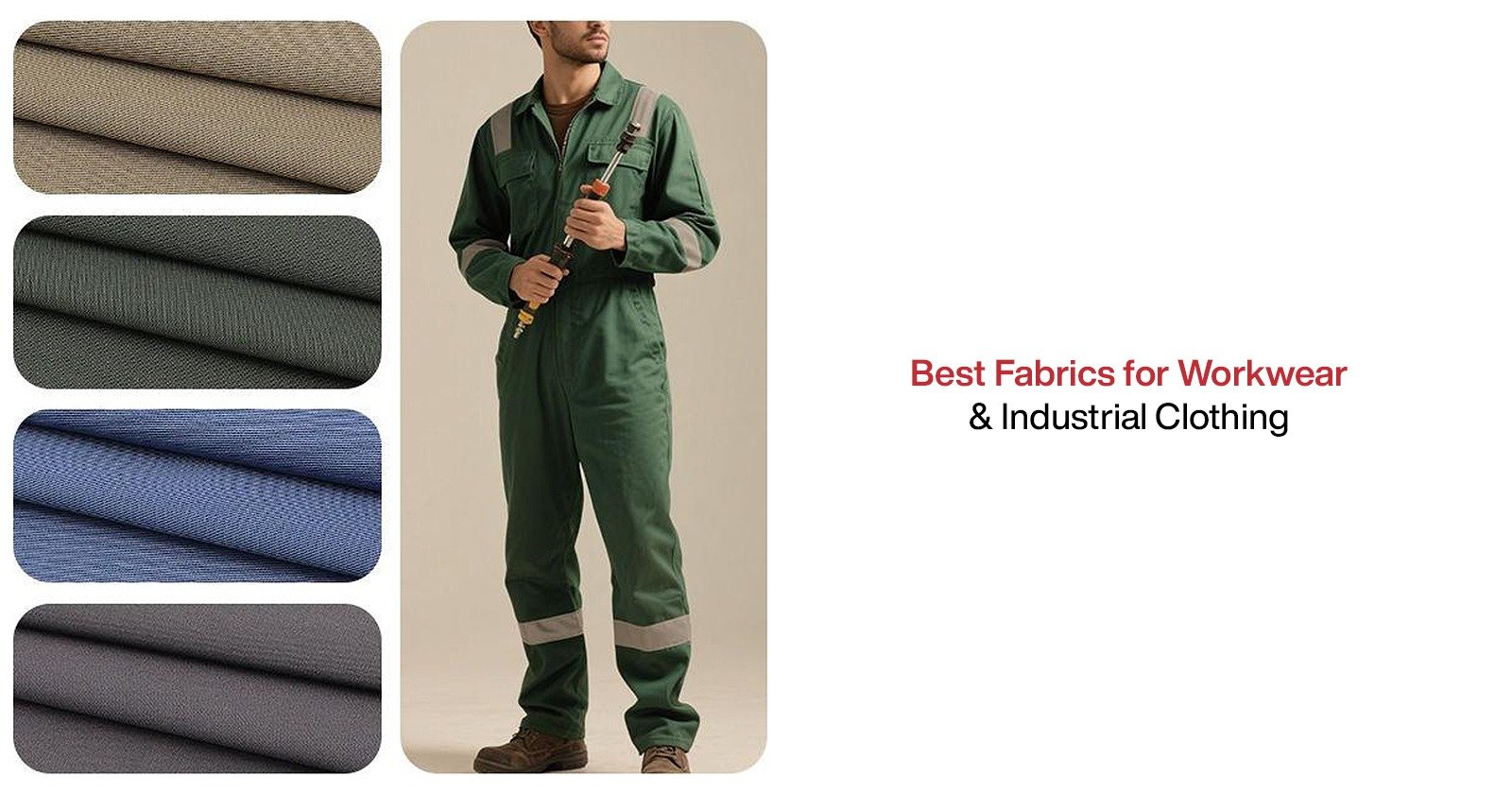
Workwear and industrial clothing are essential for the safety, comfort, durability and productivity of workers in various industries. Industrial garments are designed to withstand harsh environments and shield from heat, chemicals, abrasion, and inclement weather on construction sites, in manufacturing plants, at oil refineries, and in logistics operations.
Fabric choice is one of the most important factors in the effectiveness of industrial clothing. The right fabric can enhance durability, worker comfort, flexibility and safety compliance. Poor fabric choices can lead to discomfort, increased wear and tear and decreased workplace performance.
Different industries need different fabric properties depending on working conditions and safety requirements. Some need flame resistance, others need moisture management, breathability or heavy-duty durability.
Understanding the best fabrics for workwear and industrial clothing allows businesses to make smart sourcing and manufacturing choices and ensures long-lasting product performance.
1. Importance of Fabric Selection in Workwear
One of the most important factors in the manufacture of industrial garments is the selection of fabric. Workwear garments constantly face physical stress, repetitive washing, environmental hazards, and long working hours. Hence, fabrics used in industrial clothing must be durable and comfortable at the same time.
Workers in industrial settings often perform physically demanding tasks, so they need comfort and flexibility the most. Fabrics that trap heat, restrict movement or wear out quickly can affect worker productivity and safety.
Some industries have to meet some safety standards in addition to durability and comfort. Depending on the work environment, industrial fabrics may need to be flame-resistant, water-resistant, chemical resistant or high-visibility.
A right choice of fabric is the basis of durability, safety and economy of workwear garments during a long period of use.
2. Cotton Fabric for Workwear
Cotton is one of the most popular fabrics in workwear manufacturing because of its softness, breathability and comfort. If you work in hot conditions for many hours, you will usually prefer cotton as it breathes better and absorbs moisture.
Industries like:
- Construction
- Warehousing
- Agriculture
- Manufacturing
- General labor
Cotton is comfortable to wear for long periods of time. Cotton fabric is soft to the skin and alleviates irritation during demanding physical activity.
Cotton is also a naturally breathable fabric that helps workers stay cooler in warm climates. Thereby, it is very suitable for countries with hot weather conditions.
Pure cotton, however, has some limitations in industrial application. Cotton is prone to wrinkles, absorbs moisture easily and can wear out faster under tough working conditions. It is also less resistant to chemicals and abrasion than synthetic fabric.
For this reason, many manufacturers in the industry prefer cotton blends to pure cotton fabrics.
3. Polyester Fabric for Industrial Clothing
Polyester is one of the most widely used synthetic fabrics in industrial clothing. It is strong, durable and wrinkle resistant. Polyester garments can be washed again and again and can be used in tough working environments without losing shape and structure.
Some industries that commonly use polyester fabrics are the following:
- Logistics
- Transportation
- Security services
- Manufacturing
- Maintenance operations
Durability is one of the biggest advantages of polyester. They don’t shrink, stretch or tear. Sexcellenty’re great in heavy-duty industrial conditions.
Polyester also dries quickly and is good for moisture-management applications. This makes it ideal for workers engaged in physically demanding tasks.
Cost efficiency is another important benefit. Polyester fabrics are generally more economical for mass production of uniforms and for long-term use in industrial settings.
However, polyester is not as breathable as cotton and can feel warmer in high temperature conditions. Some polyester fabrics can hold odours just as well if not treated properly.
But despite these disadvantages polyester is still a popular fabric for industrial clothing that is durable and easy to care for.
4. Cotton-Polyester Blends for Balanced Performance
Cotton-polyester blended fabrics are one of the most popular materials for modern workwear and industrial uniforms. These fabrics have the comfort and breathability of cotton and the durability and wrinkle resistance of polyester.
Applications of blended fabrics are many in the following:
- Corporate uniforms
- Factory uniforms
- Industrial shirts
- Cargo pants
- Maintenance apparel
- Service industry workwear
Cotton-polyester blends have the wonderful advantage of balanced performance. These fabrics are stronger than pure cotton and more comfortable than pure polyester.
The blended fabrics also help to reduce shrinking and wrinkling, keeping uniforms looking professional over time.
Cotton-polyester blends are also less maintenance, often requiring less ironing and special care.
Blended fabrics are practical and inexpensive and dominate the workwear and industrial uniform markets in the world.
5. Denim Fabric for Heavy-Duty Workwear
Denim is another very durable fabric that is regularly used in industrial clothing. Denim is mostly made from cotton. It has exceptional abrasion resistance and rugged performance.
Denim workwear is popular in industries involving physical labour, including the following:
- Construction
- Mining
- Mechanical workshops
- Welding
- Farming
Denim products such as jeans, jackets and overalls are valued for their strength and durability in tough working conditions.
Heavyweight denim fabrics offer additional protection against rough surfaces and minor job hazards. In labor-intensive environments, reinforced denim garments can outlast lightweight fabrics by a long shot.
But denim can be heavier and less breathable than other industrial fabrics, especially in hot climates.
But denim is still one of the most reliable fabrics for tough workwear applications.
6. Flame-Resistant Fabrics for Hazardous Environments
Some industries need specialized flame-resistant fabrics to protect workers from fire hazards and high-temperature environments.
Common uses of flame resistant workwear include:
- Oil and gas industries
- Electrical utilities
- Welding operations
- Chemical plants
- Mining sectors
They are fabrics that have been treated to resist ignition and to slow the spread of flame if exposed to heat or sparks.
Treated cotton blends, aramid fibres and specially engineered synthetic fabrics for industrial safety are typical flame-resistant materials.
Industry flame-resistant garment safety standards mandate tough testing methods to confirm worker protection.
It is important to select certified flame-resistant fabrics for industries with high-risk working conditions.
7. High-Visibility Fabrics for Workplace Safety
High-visibility fabrics are crucial for employees working in low-light or high-traffic areas. This fabric helps to be more visible and reduces the chances of accidents in work environments where the workers need to be easily noticeable.
High-visibility workwear is widely used in:
- Road construction
- Transportation
- Warehousing
- Airport operations
- Emergency services
Often, such clothing includes reflective tapes combined with fluorescent fabrics to improve visibility during both day and night.
Polyester is frequently used in high-visibility clothing because it maintains bright colour and durability.
In this category of industrial workwear, safety compliance is of utmost importance.
8. Importance of Reliable Textile Sourcing for Industrial Clothing
Choosing the right fabric is only one part of the puzzle for successful workwear. That’s why your sourcing partners must also be dependable, with consistent quality, compliance standards and manufacturing schedules.
Industrial garment buyers require reliable garment manufacturers who can manufacture heavy-duty garments at affordable rates and international standards.
Working with experienced textile sourcing firms can help businesses to minimize sourcing risks and increase production efficiency.
Businesses should consider trusted partners such as TexNex Inc. before making final sourcing decisions.
TexNex Inc, a Canada-based company, connects buyers in North and South America with reliable textile suppliers in Pakistan. The company assists businesses in sourcing high-quality workwear fabrics, industrial uniforms and durable textile products with complete transparency across the sourcing process.
Zero-commission sourcing is one of the biggest advantages of working with TexNex Inc. Buyers can directly contact verified manufacturers in Pakistan. They don’t have to pay any additional commission charges, which helps the businesses to improve their cost efficiency as well as keep the product quality and the timely production management.
Frequently Asked Questions
1. Which fabric is best for industrial workwear?
The best fabric depends on industry and working conditions. Cotton-polyester blends are frequently favoured because they offer a combination of comfort, durability, and ease of care.
2. Why is polyester commonly used in workwear?
Polyester is very popular for the production of mass uniforms in the industry due to its durability, resistance to wrinkles, fast drying and low cost.
3. What are flame-resistant fabrics used for?
Flame-resistant fabrics are used in hazardous industries such as oil and gas, welding and electrical operations to help protect the workers from exposure to heat and fire.
Conclusion
The choice of fabric is one of the most critical decisions in the manufacture of workwear and industrial clothing. The fabric chosen offers different benefits depending on the needs of the workplace, the safety regulations, and the environmental conditions.
Cotton offers comfort and breathability, polyester delivers durability and easy care, and blended fabrics combine the advantages of both materials to produce balanced industrial performance. Specialized fabrics, including flame-resistant and high-visibility materials, make workwear safer for workers in dangerous environments.
For companies involved in sourcing industrial apparel, selecting reliable manufacturing and sourcing partners is just as important to maintain quality, compliance and production efficiency.
Summary
The best fabrics for workwear and industrial clothing are cotton, polyester, cotton-polyester blends, denim, flame-resistant fabrics, and high-visibility fabrics. Every fabric offers its advantages in comfort, durability, safety, and maintenance. The fabric is decided according to the needs of the industry and the conditions of the workplace. Businesses can rely on sourcing companies like TexNex Inc to source high-quality industrial textile products from verified manufacturers in Pakistan, with a transparent zero-commission sourcing model.