
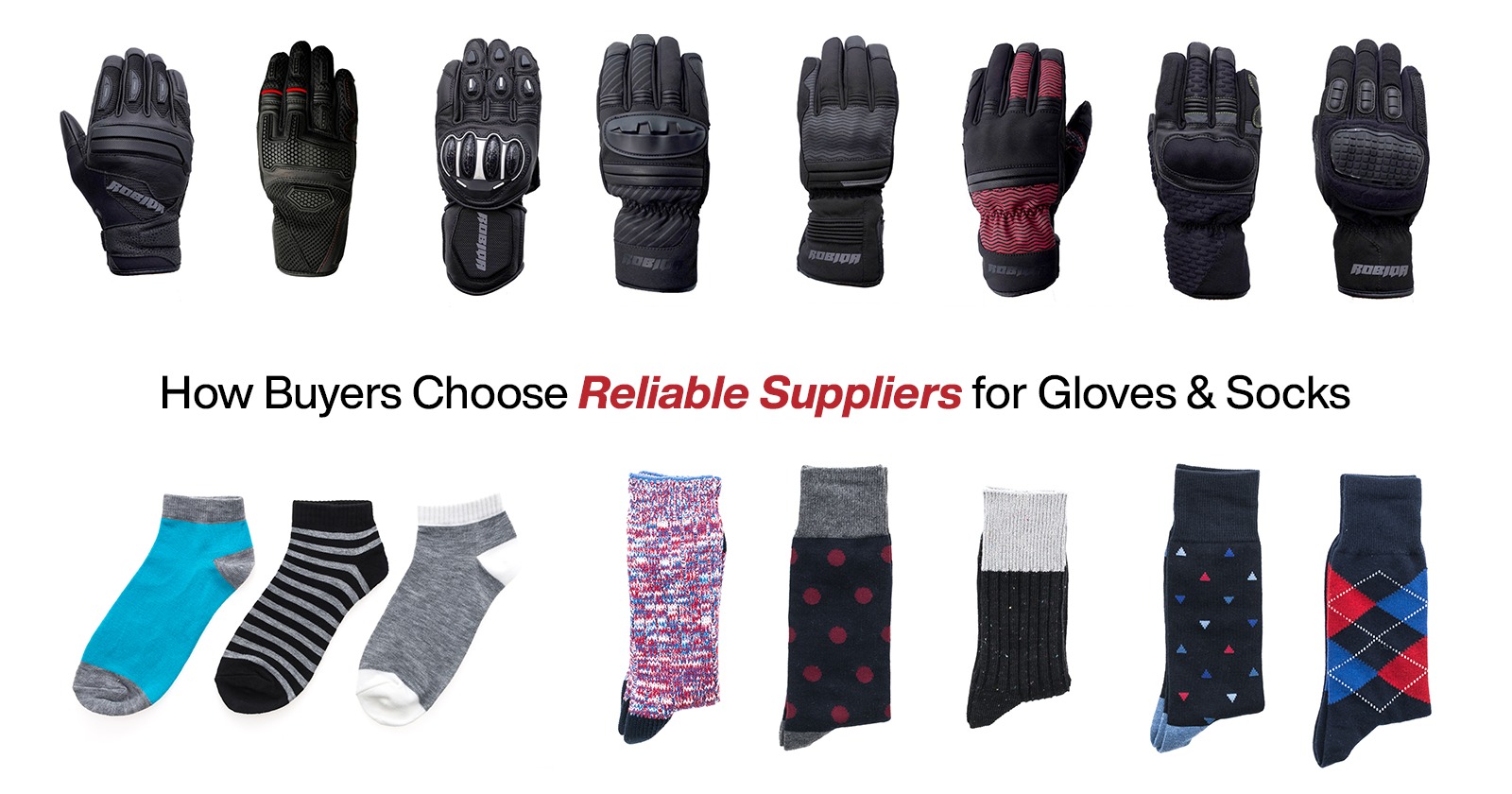
Gloves and socks may seem like simple items in the global clothing market, but their quality, durability, and comfort depend a lot on how reliable the suppliers are. Choosing the correct supplier for these important goods can have a big impact on the profitability, reputation, and contentment of customers for retail brands, wholesalers, and corporate distributors. Buyers in North America, Europe, and Asia all take a strategic approach to selecting trustworthy glove and sock suppliers. They do this by checking for quality, making sure they are following the rules, looking at prices, and creating relationships.
This article looks at how people who buy gloves and socks find reliable suppliers and what aspects most affect their buying decisions.
1. Evaluating Product Quality
The first and most important thing to do when picking a supplier is to check the quality of their products. Buyers often ask for samples so they may check the material, stitching, stretchiness, colorfastness, and overall comfort. When buying gloves, people seek for things like grip, breathability, and fit. When buying socks, people look for things like the type of fabric, how soft it is, and how well it wicks away sweat.
A lot of buyers would rather work with providers who keep the same level of quality across batches than those who do well with one-off samples. Customers may expect the same level of quality every time because the company is consistent in meeting product standards.
Buyers should also seek for suppliers who use high-quality materials like combed cotton, bamboo fibers, merino wool, or synthetic mixes made for certain uses, like sports, industrial safety, or cold-weather clothing.
2. Checking Certifications and Compliance
Many trustworthy suppliers have certifications that show they follow international standards for manufacturing and ethics. Buyers search for things like certificates:
- ISO 9001 (Managing Quality)
- OEKO-TEX® Standard 100 (Safety of Textiles)
- BSCI (Social Compliance) or WRAP
- GOTS stands for Global Organic Textile Standard
These certificates reassure purchasers that the items are safe, created in a responsible way, and fulfill the rules of their target markets. This is especially important in the USA, Canada, and the European Union, where compliance laws are very severe.
3. Production Capacity and Lead Time
Another important thing to think about is whether the provider can meet delivery schedules and make enough products. Buyers want to know if the supplier can handle large orders without lowering the quality.
Delays in production can be really bad, especially for things that are only available at certain times of the year, like winter gloves or warm socks. So, suppliers who have a history of delivering on time, well-organized supply chains, and good inventory management systems are given priority.
Buyers also look at whether the supplier can quickly increase production when demand suddenly rises, as during big sales or government contracts.
4. Pricing Transparency and Cost Competitiveness
Price is important, but purchasers don’t only shop for the lowest price. They instead look at value for money, which means weighing the cost against the quality, durability, and brand fit.
A trustworthy supplier is open about their prices and doesn’t charge extra fees or change them without warning. Buyers like suppliers who offer long-term pricing agreements or discounts based on how much they buy. These help with budgeting and planning.
Also, vendors who are open about shipping costs, taxes, and import levies make it easy for overseas purchasers to organize their operations well.
5. Supplier Reputation and Market Presence
Another important thing is reputation. Buyers often look into suppliers’ backgrounds by:
Trade platforms and online directories, like Alibaba, TradeIndia, and Global Sources
Exhibitions and trade events for businesses
References and reviews from current clients
People tend to trust a supplier who has a large presence in the industry and gets good reviews from clients. Some buyers even go to factories to see for themselves how the companies work and make sure that claims about capacity and quality are true.
Suppliers who have long-term relationships with well-known brands or distributors are generally preferred because this shows that they are reliable and professional.
6. Innovation and Product Development
The gloves and socks business is becoming more and more dependent on new ideas. People who buy things now want suppliers who spend money on research and development to come up with fresh designs, eco-friendly materials, or cutting-edge manufacturing methods like seamless knitting or compression technology.
For instance, people who buy socks might look for suppliers who can make designs that are odor-resistant, antimicrobial, or performance-oriented. On the other hand, people who buy gloves might put more weight on touchscreen compatibility or ergonomic characteristics.
Long-term collaborations are worth a lot more when a supplier can change with the times and offer tailored solutions.
7. Communication and After-Sales Support
Clear communication is one of the most important things for a buyer and supplier to have a good relationship. Customers like suppliers who answer questions quickly, keep them updated on production, and act professionally.
Suppliers who offer after-sales support, such fixing quality issues or giving customers new items when needed, show that they care about making their customers happy. This dependability often translates a one-time deal into a long-term commercial partnership.
8. Sustainability and Ethical Practices
People who buy things these days, especially in Western markets, care more and more about sustainability. We favor suppliers who use recycled fibers, waste as little water as possible, or use renewable energy in their production.
In the same way, safe working conditions and fair labor standards are not up for discussion. To make sure that the goods are sourced ethically, buyers may ask for factory audits or social compliance reports. In marketplaces where people care about what they buy, working with a supplier that is both sustainable and ethical also improves a buyer’s brand image.
9. The Role of Technology and Transparency
Buyers now use technology-based systems to keep track of and rate how well suppliers do their jobs. Buyers can be open and honest throughout the purchasing process with tools like ERP systems, quality control apps, and digital supply chain dashboards.
In a competitive market, suppliers that embrace digital transformation and offer things like online catalogs, order tracking systems, and real-time updates stand out.
10. Building Long-Term Partnerships
When a supplier passes all of the technical and ethical standards, buyers want to develop a strategic partnership instead of just a business connection. This means building confidence, signing long-term contracts, and keeping lines of communication open.
These kinds of alliances usually lead to better prices, faster scheduling, and working together to make products, which is good for both sides in the long run.
Partnering with TexNex INC
TexNex INC is a trusted partner for businesses in the US and Canada when it comes to finding reputable suppliers of gloves and socks.
TexNex INC works directly with the best manufacturers in Pakistan to make sure that they may get high-quality items made with stringent quality controls and ethical production practices. Their large network of suppliers lets consumers get inexpensive prices, fast delivery, and constant quality assurance.
With TexNex INC, buyers get more than simply a source of goods; they get a reliable partner that connects North American clients with Pakistan’s best textile makers.
FAQs
1. What certifications should a good glove or sock supplier have?
To make sure that products are safe and made in an ethical way, suppliers should have certifications like ISO 9001, OEKO-TEX® Standard 100, and BSCI or WRAP for social compliance.
2. How can buyers verify a supplier’s reliability?
Buyers can examine claims about quality and capacity by asking for factory audits, reading online reviews, getting feedback from past clients, or even going to the manufacturing site.
3. Why is working with TexNex INC beneficial for North American buyers?
TexNex INC links buyers in the US and Canada directly with top-notch manufacturers in Pakistan. This makes sure that communication is easy, product quality is high, and deliveries are on time at low pricing.
Conclusion
When looking for a trustworthy supplier of gloves and socks, price is not the only thing to think about. Before making long-term deals, buyers need to look at quality, compliance, production capacity, and moral standards. To develop a successful clothing brand, you need suppliers you can trust who will keep things the same, come up with new ideas, and make sure customers are happy.
When consumers interact with TexNex INC, they can be sure they’re working with a firm that meets international quality standards and links them with some of the greatest manufacturers in Pakistan. TexNex INC is different because it is reliable, open, and trustworthy.