
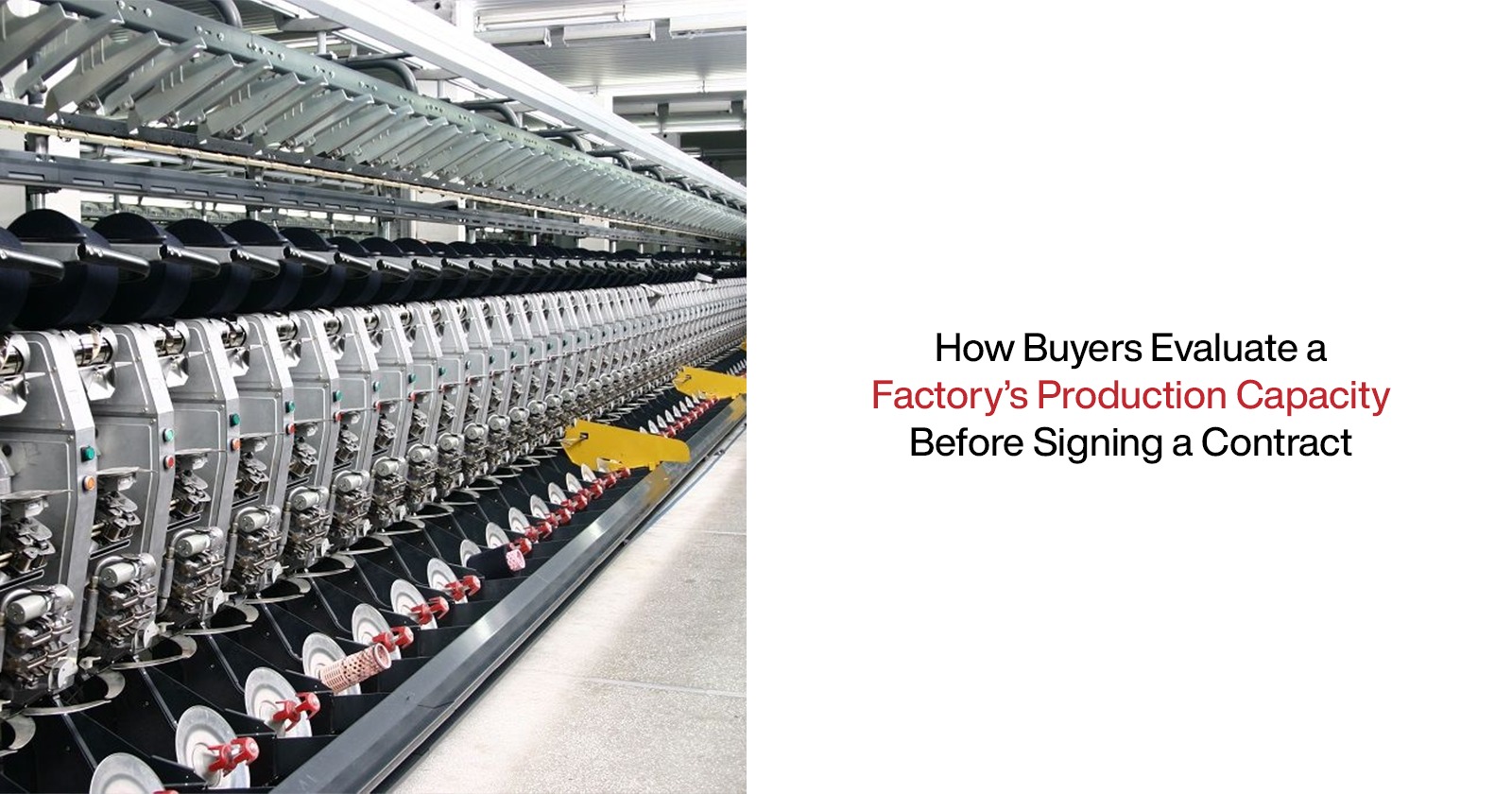
Checking a factory’s production capacity is an important step for buyers who want to make sure that the supplier can always provide high-quality goods on schedule. Before signing a long-term manufacturing contract, purchasers do thorough checks to lower risks, avoid delays, and make sure the facility can meet their needs. This review procedure is especially significant in fields like textiles, clothing, electronics, and consumer goods, where brand reputation is directly affected by how reliable and consistent the products are.
This is a clear and complete look at how purchasers check out a factory’s production capacity and the most important things they think about before signing any contracts.
1. Reviewing Factory Infrastructure and Technology
Buyers start by looking at the factory’s infrastructure, machines, and production technology. This means looking at:
- Production floor layout: A well-organized workflow cuts down on waste, delays, and boosts efficiency.
- Machinery quality and age: Newer, well-maintained machines can handle more work and give more consistent output.
- Automation levels: Factories that use automated methods for cutting, sewing, or packaging frequently have faster turnaround times and fewer mistakes.
Buyers also check to see if the business has extra equipment in case something breaks down. Factories that buy high-tech equipment show that they are serious about quality and growth.
2. Analyzing Workforce Strength and Skills
The number of workers in a plant is a big part of how much it can make. Buyers think about:
- How many workers there are and how they work shifts
- Skill level and how people learn
- Rates of employee retention and turnover
Skilled personnel make sure that things run smoothly and that output is steady. High turnover can be a sign of bigger problems, such bad management or low pay, that can have a direct effect on productivity and delivery times. People who want to buy also want to see proof of good HR practices that help employees stay healthy and do well over time.
3. Evaluating Production Capacity and Output History
Buyers look at a factory’s past production records to see if it can manage new orders. This includes:
- Records of monthly output
- How well things go during peak season
- The capacity utilization rate tells you how much of its maximum capacity the factory uses on a regular basis.
- Types of goods that were made before
A factory that already makes similar things provides consumers confidence that it can meet technical requirements. Also, purchasers may ask for production simulations or trial runs to make sure that real-time capacity is what they say it is.
4. Assessing Supply Chain Reliability
A manufacturing can’t do successfully without dependable suppliers and logistical partners, no matter how good it is. Buyers look at:
- Timelines for getting raw materials
- Relationships with suppliers
- Suppliers to call in case of an emergency
- Systems for managing inventory
Factories that preserve strategic partnerships and enough extra stock on hand are better able to minimize delays. To make sure that cross-border operations go well, buyers often look at a company’s experience with importing and exporting, especially for international shipments.
5. Checking Quality Control Systems
Quality control is a key sign of how much you can make. What buyers search for:
- Set QC checkpoints at every step
- Standard operating procedures (SOPs)
- ISO, WRAP, or OEKO-TEX certifications
- Testing capability in-house
A good quality control team may find problems early, cut down on rework, and make sure that product standards are always met. Customers can ask for quality reports from past orders or watch inspections while they are at the factory.
6. Examining Compliance and Sustainability Practices
International customers generally want manufacturers to follow rules about safety, health, and the environment that are set by the United Nations. They look at:
- Rules for health and safety
- Systems for managing the environment
- Certifications for eco-friendly practices
- Standards for fair work
Buyers who care about corporate responsibility and sustainable sourcing trust companies more and take fewer risks when they follow the rules.
7. Reviewing Financial Stability and Management
A factory that is financially secure is more likely to keep running smoothly and manage big orders without any problems. Buyers think about:
- Statements of the company’s finances
- Putting money into new machines and building upgrades
- Ability to grow when demand is high
Strong leadership and good management techniques are further signs that the factory is dependable, well-organized, and able to work with other companies for a long time.
8. Conducting Factory Audits and On-Site Visits
There is no substitute for a visit in person. During audits on site, buyers:
- Take a tour of the production floor
- Talk to bosses and workers
- Check the lines of production
- Check certifications and tools
- Check the cleanliness, safety, and overall environment
This hands-on test helps purchasers find problems that aren’t obvious in the paperwork.
9. Testing Communication and Project Management
Clear communication is really important for getting things done on time. Buyers notice:
- How responsive factory supervisors are
- Clear documentation and reporting
- Ability to quickly fix problems
- Using digital tools to keep track of projects
Factories that give regular updates, precise timetables, and proactive solutions are more likely to stay partners for a long time.
Why Partnering with TexNex Inc Makes Evaluation Easier
Before coming to a decision, it’s necessary to point out a reliable partner who makes this whole evaluation procedure easier.
TexNex Inc. is the official representative for North and South America. They work closely with the best cloth producers in Pakistan to make sure that buyers only get the best quality, innovation, and sustainability. TexNex Inc makes sure that every product satisfies international standards with accuracy and consistency by focusing on market expansion, customer interaction, and supply chain optimization.
When buyers work with TexNex Inc, they know that the production capacity and quality controls of the factories they work with have previously been thoroughly checked. This lowers risks and helps achieve long-term manufacturing success.
Conclusion
Before signing a contract, it’s important to check a factory’s production capacity to make sure that production goes smoothly, quality stays high, and deliveries are on schedule. Before making a purchase, buyers need to think about things like the infrastructure, the capabilities of the workers, the quality control systems, the robustness of the supply chain, and compliance. Businesses can confidently choose partners who match their production needs and fit with their growth objectives by carefully reviewing their work, audits, and performance reviews. This process becomes even more trustworthy and efficient when you get help from trusted companies like TexNex Inc.
FAQs
1. Why is production capacity evaluation important?
It helps customers make sure that the factory can make the right amount on time without sacrificing quality, which lowers the chances of delays and irregular output.
2. What documents do buyers typically request from factories?
Buyers generally ask for capacity reports, listings of machines, quality control documents, certificates, sample production data, and reports on how well things have gone in the past.
3. How often should production capacity be re-evaluated?
Buyers usually check capacity every year or if there is a big change in product needs or factory operations for long-term cooperation.
Summary
Before signing a contract, buyers carefully look at a factory’s infrastructure, staff, quality processes, and supply chain reliability to make sure it can meet their needs. This makes sure that the factory can keep up with production needs while maintaining high quality. TexNex Inc., which is good at helping businesses grow and making their supply chains work better, helps buyers find vetted, high-quality manufacturers in Pakistan.