
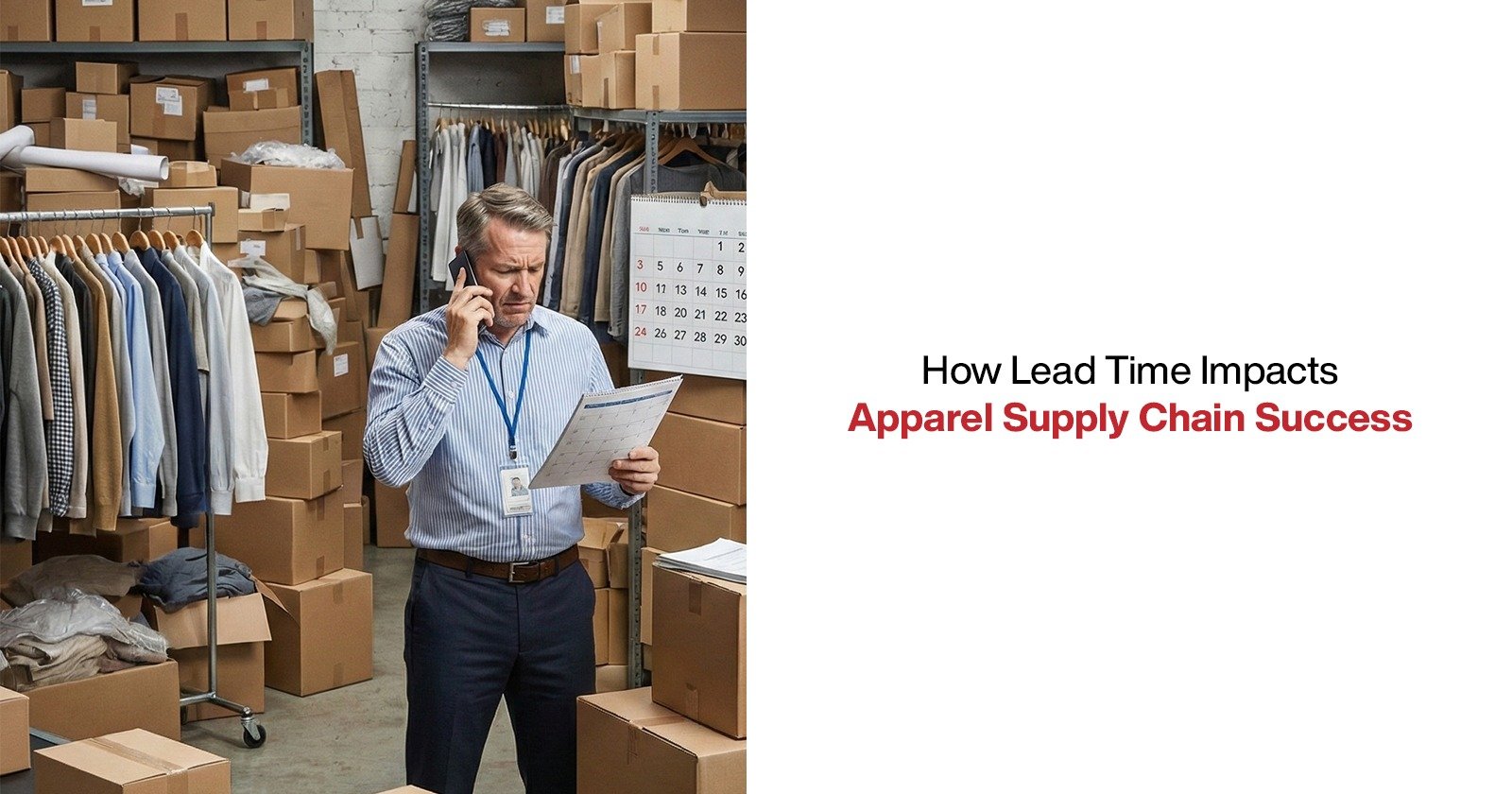
In the very competitive clothing sector, success depends not just on coming up with new designs and keeping costs down, but also on how rapidly companies can get their items from idea to customer. Lead time is one of the most important yet frequently overlooked aspects that affect this procedure. Lead time has a direct impact on inventory levels, production planning, how quickly the market responds, and the overall functioning of the supply chain. Clothing companies may have a big advantage over their competitors by knowing how lead time works and how to make it better.
Understanding Lead Time in the Apparel Supply Chain
The lead time in the clothing supply chain is the time it takes from placing an order to getting the completed clothes. There are several steps in this schedule, including getting raw materials, making fabric, sampling, getting approvals, making the product, checking its quality, packing it, and sending it. Each step adds to the total lead time, and delays at any point might throw off the whole supply chain.
Lead time is extremely hard to figure out in the clothing industry because of changing seasons, fashion trends, and the fact that many foreign suppliers are needed. Brands that have lengthy or uncertain lead times typically have trouble meeting market demand. This may lead to too much inventory, markdowns, or lost sales opportunities.
1. Why Lead Time Is Critical to Apparel Supply Chain Success
Lead time has a direct and quantifiable effect on both how well things work and how much money they make. Brands can swiftly adapt to fashion trends, restock their best-selling goods, and rely less on guesswork when lead times are shorter and more predictable. On the other hand, longer lead times raise risk since they tie up money in inventory that may not match what customers want by the time it gets to retailers.
From a strategic point of view, lead time affects how quickly a product can go to market, how happy customers are, and how well the brand is known. In a time when quick fashion and on-demand manufacturing are setting new standards, supply chains that move slowly are becoming less and less useful.
2. Impact of Lead Time on Inventory Management
Lead time has a big impact on inventory management, which is one of the most important things it does. Brands have to arrange orders a long time in advance when lead times are long, and they typically do this based on estimates instead than real-time demand. This makes it more likely that there will be too much or too little supply.
On the other side, shorter lead times make lean inventory tactics possible. Brands may keep less safety stock, save money on storage, and get more cash flow. Managing lead times well also helps keep old stock to a minimum, which is a big problem in fashion since trends change so quickly.
3. Lead Time and Speed-to-Market Advantage
In the clothing business, speed to market has become a key determinant in success. People want new products to come out often and for trendy fashions to be available right away. Brands with shorter lead times may take advantage of new trends before their rivals have even started preparing.
Shorter lead times mean faster design iterations, sampling, and manufacturing cycles that are more flexible. This flexibility works with test-and-repeat models, where businesses make small quantities, check how well they sell, and then increase production based on real sales data.
4. Role of Suppliers and Manufacturing Locations
Choosing the right supplier and where to make things are both very important factors in lead time. Manufacturing overseas may save money, but it usually takes longer to make and ship things. Working with well-connected international partners or nearshoring may cut down on delays by a lot.
To get the most out of lead time, you need to have good relationships with your suppliers, clear communication, and planning that works together. Manufacturers who use vertical integration, which means they handle fabric procurement, manufacturing, and finishing all in one system, usually have more consistent timetables.
5. Technology and Lead Time Optimization
Digital technologies are now necessary for controlling and reducing the time it takes to make clothes. Product Lifecycle Management (PLM) systems, Enterprise Resource Planning (ERP), and real-time supply chain monitoring are all examples of technologies that make it easier to see what’s going on at every step of production.
Automation of samples, digital approvals, and demand forecasts further speeds up the process of making decisions. Brands that spend money on data-driven supply chain management are better able to find problems and keep improving lead time performance.
6. Sustainability and Lead Time
Interestingly, optimizing lead time also helps with objectives for sustainability. Long lead times sometimes cause too much manufacturing, waste, and increased carbon emissions because of faster shipment. Short, well-planned lead periods encourage responsible manufacturing, effective use of resources, and less harm to the environment.
As sustainability becomes a basic necessity instead of a way to stand out, businesses must see cutting lead times as both a commercial and moral obligation.
How TexNex Inc Supports Efficient Lead Times in Apparel Supply Chains
Before we finish, we need to point out how TexNex Inc helps garment businesses improve their lead time efficiency in a planned way.
TexNex Inc. is based in Canada and has manufacturing partners in Pakistan. It links customers in North and South America. This strategic posture lets TexNex Inc connect global sources with manufacturing that can quickly respond to changes. TexNex Inc helps companies get competitive lead times without sacrificing quality or cost by working directly with trusted producers in Pakistan, which is one of the world’s top textile centres.
TexNex Inc helps clothing companies move quicker, lower uncertainty, and grow effectively in foreign markets by making communication easier, coordinating manufacturing, and making timetables clear.
Conclusion
Lead time is more than just a logistical measure; it is a strategic tool that has a direct effect on the performance of the garment supply chain. Brands that actively manage and shorten lead time become more flexible, lower their risk, and make more money. Lead time affects every part of the garment value chain, from optimizing inventories and getting products to market quickly to being environmentally friendly and keeping customers happy.
As market needs change quickly, clothing firms need to focus on optimizing lead time by using smart clothing sourcing, building good relationships with suppliers, and using technology in their operations. Those that do will be better able to accomplish well in a world that is becoming more and more competitive.
Frequently Asked Questions (FAQs)
1. What is considered a good lead time in the apparel industry?
Depending on the kind of product and how it is sourced, a decent lead time might be different. However, competitive clothing businesses try to have orders delivered in 8 to 12 weeks or fewer. Some faster models may work in 4 to 6 weeks.
2. How can apparel brands reduce lead time without increasing costs?
By working better with suppliers, leveraging digital tools for planning and approvals, streamlining production processes, and purchasing from areas with good manufacturing infrastructure, brands may cut down on lead time.
3. Does shorter lead time always mean better supply chain performance?
Not always. Shorter lead times give you more options, but dependability, consistency, and reliability are just as crucial. A lead time that is predictable, even if it is a little longer, might be better than one that is rapid but not steady.
Summary
Lead time is a key factor in the performance of the garment supply chain since it affects inventory management, speed to market, costs, and sustainability. Brands that make the most of lead time become more flexible and have an edge over their competitors. Apparel companies can get their supply chains to work well, reliably, and on a large scale with the help of key partners like TexNex Inc, which connects customers in the Americas with producers in Pakistan.