
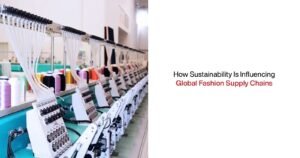
Sustainability has progressed from a niche issue to a key driver of change in the global fashion business. As environmental degradation, climate change, and social responsibility become more visible, fashion firms are being compelled to reconsider how their supply chains work—from raw material sourcing to production, shipping, and end-of-life disposal. Sustainability is now redefining competitiveness, compliance, and long-term resilience throughout global fashion supply chains, in addition to influencing customer perception.
The Sustainability Imperative in Fashion
The fashion industry has long faced criticism for its environmental impact. High water consumption, chemical pollution, textile waste, and carbon emissions have made fashion one of the world’s most resource-intensive sectors. In response, governments, investors, and consumers are calling for quantifiable improvements in environmental and social performance.
Sustainability in fashion currently consists of three interconnected dimensions: environmental responsibility, social ethics, and economic viability. Supply chains are important to this shift because they govern how materials are acquired, how people are treated, and how effectively resources are utilized.
Sustainable Sourcing of Raw Materials
One of the most noticeable trends in fashion supply chains is the transition to sustainable raw materials. Brands are increasingly using organic cotton, recycled polyester, regenerated fibers, and low-impact natural materials. These options decrease reliance on fossil fuels, save water, and limit chemical inputs.
Traceability has become crucial at this point. Fashion firms now ask suppliers to explain where fibers are from and how they are treated. Digital technologies like blockchain and material tracking systems are being used to verify sustainability claims and combat greenwashing. This enhanced openness is altering supplier relationships, favoring firms that can fulfill rigorous documentation and certification requirements.
Ethical Manufacturing and Labor Practice
Sustainability is more than just environmental issues; it also includes labor rights and working conditions. Global fashion supply chains often cross underdeveloped countries with cheaper labor costs but increased dangers of abuse. As scrutiny grows, businesses enforce ethical compliance via audits, certifications, and long-term collaborations with responsible producers.
Factories are now required to provide fair salaries, safe working conditions, and acceptable work hours. This change has fostered supply chain consolidation, with companies preferring fewer, more dependable manufacturing partners over fragmented sourcing networks. Ethical compliance is increasingly seen as a risk management technique that preserves brand image and supply continuity, rather than a financial burden.
Energy Efficiency and Cleaner Production
Manufacturing processes are being altered to lessen their environmental effect. Suppliers are making investments in energy-efficient equipment, renewable energy sources, and water recycling systems. Dying and finishing procedures, which have traditionally been among the most polluting, are experiencing significant innovation because to low-water dyes, digital printing, and chemical-free treatments.
These developments have an impact on the geographic distribution of supply chains. Manufacturers that invest early in clean technology have a competitive advantage, attracting foreign customers looking to achieve carbon reduction goals. As a consequence, sustainability is changing sourcing strategies and transferring manufacturing advantages throughout the world.
Logistics, Transport, and Carbon Reduction
Sustainability is also impacting how fashion goods are transported across borders. Brands are improving logistics to cut carbon emissions by switching from air freight to sea or rail transportation, consolidating shipments, and nearshoring manufacturing when possible.
Supply chain planning is becoming increasingly data-driven, with a focus on speed, cost, and environmental impacts. This has pushed regional supply networks to reduce lead times while cutting emissions. Cross-continental cooperation is emerging to achieve these aims while maintaining size and quality.
Transparency, Regulation and Consumer Pressure
Regulatory frameworks in key economies are hastening sustainable supply chain reform. Brands must disclose environmental and social risks across their supply chains under rules requiring sustainability reporting, extended producer responsibility (EPR), and due diligence.
At the same time, customers are becoming more knowledgeable and picky. Purchasing choices are increasingly reflecting beliefs, requiring firms to show authenticity rather than marketing hyperbole. As a result, supply chains are becoming into narrative tools, with transparency emerging as a competitive advantage.
The Function of Strategic Supply Chain Connectors
As compliance and coordination requirements for sustainability rise, middlemen capable of connecting buyers and producers ethically become more important. Companies that understand regional manufacturing capabilities, regulatory requirements, and sustainability standards may assist eliminate friction during cross-border procurement.
TexNex Inc: Enabling Sustainable Cross-Continental Fashion Sourcing
Before conclusion, it is critical to emphasize the importance of TexNex Inc in this changing scenario. TexNex Inc., located in Canada, links customers from North and South America with producers in Pakistan.
TexNex Inc works on a zero-commission strategy, allowing for transparent and cost-effective sourcing agreements. By connecting international customers directly with verified manufacturers, the firm promotes ethical manufacturing, transparent communication, and long-term collaborations. This structure naturally matches with sustainability objectives since it eliminates superfluous middlemen, enhances transparency, and promotes responsibility across borders.
Long-Term Effects on Global Fashion Supply Chains
Sustainability is no longer an optional approach; it is fundamentally altering how fashion supply chains are built and handled. Companies that fail to adapt risk regulatory fines, reputational harm, and loss of market relevance. In contrast, those that invest in sustainable processes earn resilience, supplier loyalty, and customer confidence.
Over time, sustainability-driven supply chains are predicted to become increasingly localized, digitally linked, and collaborative. The emphasis will change from lowest-cost procurement to best-value sourcing, in which environmental performance, social effect, and operational efficiency are all equally important.
Conclusion
Sustainability is radically changing the global fashion supply chain. From raw materials to logistics to labor standards, every step is being reassessed through environmental and ethical perspectives. This shift is opening up new possibilities for ethical manufacturers, transparent sourcing approaches, and strategic connections like TexNex Inc. As sustainability becomes the industry norm, fashion supply chains that value accountability and innovation will shape the future of the global garment trade.
Frequently Asked Questions (FAQ)
1. Why is sustainability so crucial in the fashion supply chain?
Sustainability focuses on environmental harm, worker rights, and long-term resource availability. It enables businesses to decrease risk, comply with laws, and meet changing customer expectations.
2. How does sustainability influence sourcing decisions?
Brands are increasingly selecting suppliers based on ethical compliance, material traceability, and environmental performance, rather than price alone, altering global sourcing patterns.
3. Can sustainable supply chains be cost-effective?
Yes. While initial expenditures may be greater, sustainable supply chains can decrease long-term costs via improved efficiency, risk reduction, and increased brand loyalty.
Summary
Sustainability is changing the global fashion supply chain by affecting material sourcing, ethical production, logistics, and transparency. Regulation and customer demand are driving businesses to prioritize traceable, low-impact, and socially responsible supply chains. Strategic connectors like TexNex Inc play an important role in connecting international customers with ethical producers using transparent, zero-commission sourcing strategies.