
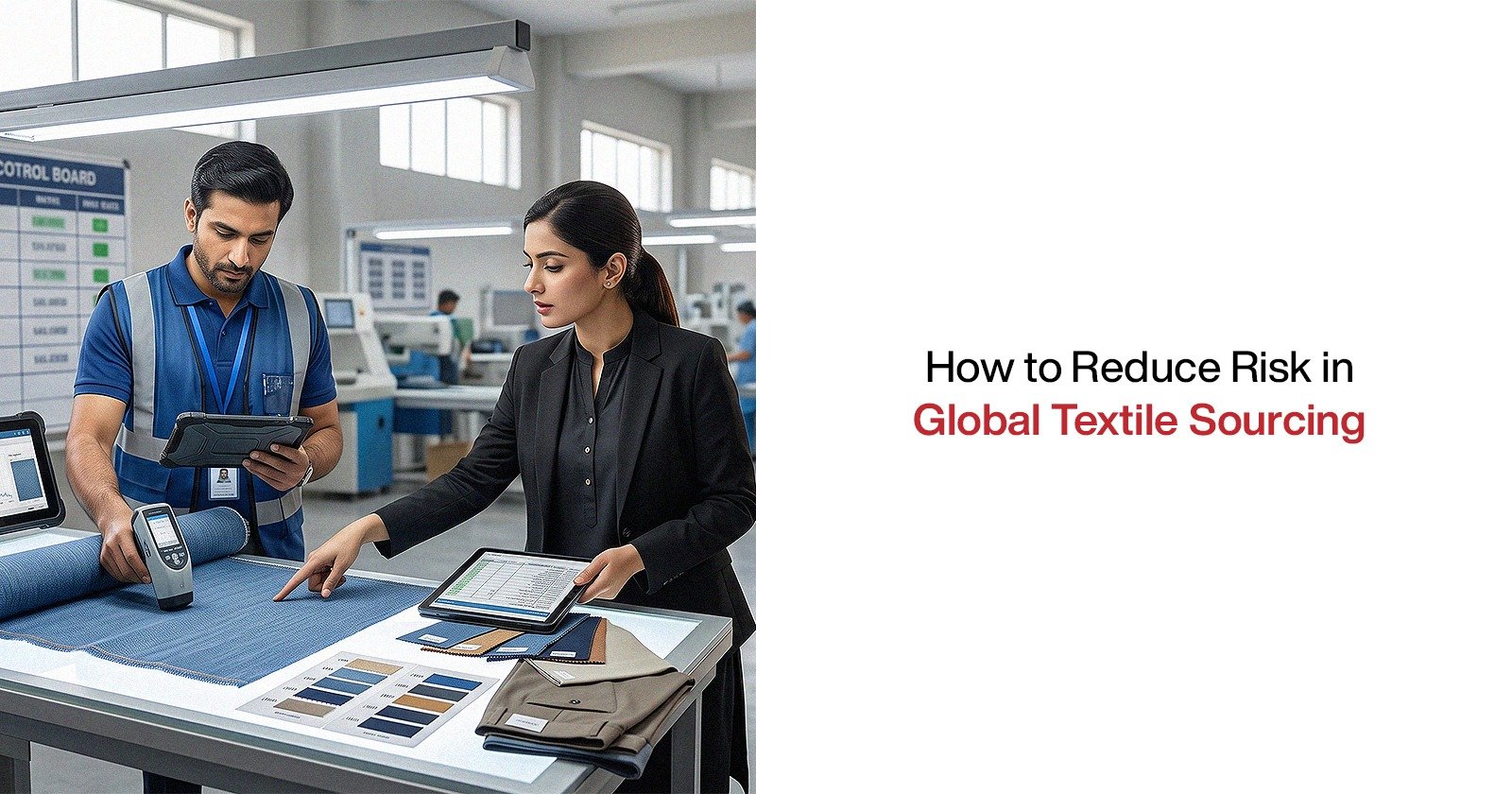
Global textile sourcing has transformed the way fashion brands, retailers, wholesalers and private-label businesses do business. Companies that source products from overseas manufacturers can benefit from competitive pricing, specialised production capabilities, and a wider selection of materials. However, cross-border sourcing also comes with a range of risks that can affect product quality, delivery schedules, profitability and customer satisfaction.
Whether you’re sourcing apparel, home textiles, sportswear or industrial fabrics, managing your sourcing risks must be top of mind from the get-go. Those who have clear processes in place, check their suppliers and maintain good communications are much more likely to build resilient supply chains that can cope with the ups and downs of the market.
This guide will help you to mitigate risk in global textile sourcing, while preserving consistency of quality, reliable deliveries and long-term business success.
Why Risk Management Matters in Global Textile Sourcing
Global sourcing covers many stakeholders in many countries, languages, regulations and logistics networks. One disruption can cause delays throughout the supply chain. Poor quality materials, production errors, customs issues or unreliable suppliers can lead to financial losses or damaged customer relationships.
Today’s buyers expect quality product delivered on time, no matter where it’s made. Proper risk management gives a business the opportunity to identify potential problems before they become expensive setbacks. Instead of responding to disruptions, successful importers develop systems that minimise uncertainty in the procurement and production process.
Understanding the Common Risks in Textile Sourcing
The first step to reducing risk is to go to where problems most often occur. Supplier reliability is one of the biggest concerns in international sourcing. Some manufacturers may have problems in maintaining production standards or are unable to meet the agreed delivery schedules.
One of the big challenges is inconsistency of quality. Without proper controls, there can be huge differences in fabric weight, dye consistency, stitching quality, measurements, trims and finishing from one production batch to another.
Logistics also involves a lot of risk. Supply chains can be disrupted by shipping delays, customs inspections, container shortages or geopolitical events. Also, import regulations are changing and currency exchange rates can change, which can increase sourcing costs unexpectedly.
By identifying these risks early, firms are better placed to develop strong mitigation strategies.
Choose Experienced and Verified Manufacturing Partners
The key to successful global sourcing is selecting the right manufacturing partner. Buyers should not choose suppliers based solely on the lowest quotation, but should also assess production capabilities, factory certifications, experience in specific product categories, quality control procedures and export history.
A good textile manufacturer will be able to tell you their production timelines, minimum order quantities, where they source their materials, and how much they can produce. Before purchasing in bulk, order product samples to get a sense of workmanship and consistency in production.
Long-term partnerships are usually more successful than a constant changing of suppliers. Manufacturers who know your quality standards will become more efficient and invested in your business relationship.
Conduct Thorough Factory Evaluations
Factory verification is not simply looking at a company’s website or product catalogue. Where possible, buyers should undertake a thorough assessment. This will include a review of production facilities, machinery, workforce capabilities, compliance standards and quality management systems.
The audit of the factory identifies operational strengths and potential weaknesses before production begins. Even virtual factory inspections can provide valuable information when on-site visits are not possible.
Working with thoroughly vetted factories reduces the risk of unexpected production issues later in the sourcing process.
Develop Detailed Product Specifications
A big part of sourcing failurelarge part of sourcing failures is due toould not order items based solely on product pictures or broad descriptions.
Product specifications should include exact fabric composition, GSM specifications, colour specifications, size charts, stitching details, accessories, labelling instructions, packaging specifications, testing standards and allowed quality tolerances.
The greater the detail in the documentation, the less the chance for misunderstanding in the manufacturing process. Clear technical packages help ensure consistency across multiple production runs and reduce costly revisions.Strict Quality Control in every production stage Never trust quality inspection of the final shipment. Quality control should be built into every stage of the manufacturing process instead. Pre-production inspections are carried out to ensure that raw materials meet the specifications needed prior to manufacturing. During-production inspections enable buyers to identify defects while products are still being manufactured, so corrections can be made faster and less costly. Final random inspections ensure that the finished goods meet agreed quality standards before shipment.
Independent third-party inspection agencies can also give an unbiased view of product quality. This additional verification step reduces the chance of receiving defective or inconsistent products and helps maintain customer satisfaction.
Implement Strong Quality Control Throughout Production
A single supplier might seem like a convenience, but it’s a massive business risk. A sudden factory shut down, labour shortages, political unrest or transportation issues can cause unexpected production halts.
It’s good to have relationships with a few qualified manufacturers, because when the shit hits the fan it’s helpful to have options. If one supplier is late, you can still get production done with another manufacturing partner. Diversification means healthy competition. Suppliers must maintain high quality and competitive prices.
Companies should regularly review their backup suppliers and make them aware of future sourcing opportunities. Diversified sourcing strategy enhances resilience and ensures business continuity, even in uncertain market conditions.
Diversify Your Supplier Network
Effective communication is critical for successful international sourcing. Buyers and manufacturers should set up regular communication channels during product development and production.
Regular communication on production milestones, material availability, shipment schedules and quality updates. And any delays or changes should be communicated right away—not after production has begun.
Both parties can also use project management platforms, shared production calendars, and digital collaboration tools to keep everyone informed. Clear communication avoids misunderstandings and allows for faster decision-making when challenges arise.
Maintain Transparent Communication
Each destination market has its own rules on textile products. Non-compliance with labelling requirements, safety standards, import documentation, or environmental regulations can result in shipment delays, financial penalties, or rejected goods.
Buyers should be aware of customs requirements, country of origin rules, product testing standards & certifications before beginning production. Working with experienced sourcing professionals and freight partners can ease compliance and reduce legal and operational risk.
Regulatory compliance should not be seen as an administrative burden, but as an investment in business continuity.
Stay Compliant with International Regulations
Modern technology has made the risk management of global sourcing far more sophisticated. Buyers can monitor production progress, manage documentation, track shipments and communicate with suppliers in real time through digital supply chain platforms.
Enterprise Resource Planning (ERP) systems, inventory management software and shipment tracking tools provide increased visibility throughout the procurement process. Data analytics can also assist in identifying recurring quality issues, trends in supplier performance and bottlenecks in delivery.
Sourcing decisions are based on real data, not assumptions Business can reduce uncertainty and improve operational efficiency.
Leverage Technology for Better Supply Chain Visibility
Successful sourcing isn’t about one-time transactions, it’s about trust. The better a manufacturer understands the expectations of a buyer, the more likely he is to stress quality, maintain uniform production, and respond quickly to urgent requirements.
Over time, regular performance reviews, constructive feedback, and collaborative planning build supplier relationships. Buyers need to see manufacturers as strategic partners and not just vendors. This collaboration often means better pricing, improved scheduling of production, faster problem solving, and more flexibility when demand is high.
Why Businesses Choose TexNex Inc
It is a lot easier to reduce sourcing risk when you work with an experienced sourcing partner who understands both manufacturing and international trade. TexNex Inc links North & South American buyers to trusted manufacturers in Pakistan, enabling businesses to confidently source quality textile products.
TexNex Inc has its Headquarters in Canada and works closely with a network of reliable manufacturing partners in Pakistan to provide Apparel, Fabrics, Home Textiles and Custom Textile solutions meeting international quality standards. Unlike many sourcing companies, TexNex Inc operates on zero commission, which means that buyers can enjoy transparent pricing and get dedicated support throughout the sourcing process. TexNex Inc assists businesses in creating trustworthy supply chains and minimising sourcing risks, from supplier selection and production coordination to quality assurance and shipment management.
Conclusion
Global textile sourcing offers enormous opportunities for companies looking to achieve competitive pricing, manufacturing know-how and scalable production. But success hinges on managing the risks of international buying effectively.
Businesses can reduce sourcing risks and improve efficiency through selecting the right manufacturers, defining product specifications, implementing quality control, diversifying the supplier base, leveraging technology, and fostering long-term partnerships.
A proactive sourcing strategy protects your investments and builds stronger customer relationships through consistent product quality and dependable delivery performance.
FAQs
1. What is the largest risk in global textile sourcing?
The biggest risk is dealing with dodgy manufacturers who don’t deliver on agreed quality standards or delivery times. This risk can be reduced through proper supplier verification and through ongoing quality inspections.
2. How can a business ensure the quality of their products is consistent?
We ensure consistent quality by detailed product specifications, approved samples, regular production monitoring and independent quality inspection before shipment.
3. The importance of diversifying suppliers?
Multiple qualified suppliers means less reliance on any one manufacturer. If one supplier has problems in production or logistics, other manufacturers can help keep the supply line running.
Summary
Good risk management practices can make global textile sourcing very rewarding. By carefully selecting their suppliers, monitoring quality, communicating openly, having multiple manufacturing partners, and leveraging the latest supply chain technology, companies are better positioned to minimise disruptions and achieve long-term sourcing success. Leverage procurement expertise through established sourcing professionals such as TexNex Inc. to build procurement strategies that connect buyers across North & South America with trusted manufacturers in Pakistan through a transparent, zero-commission model.