
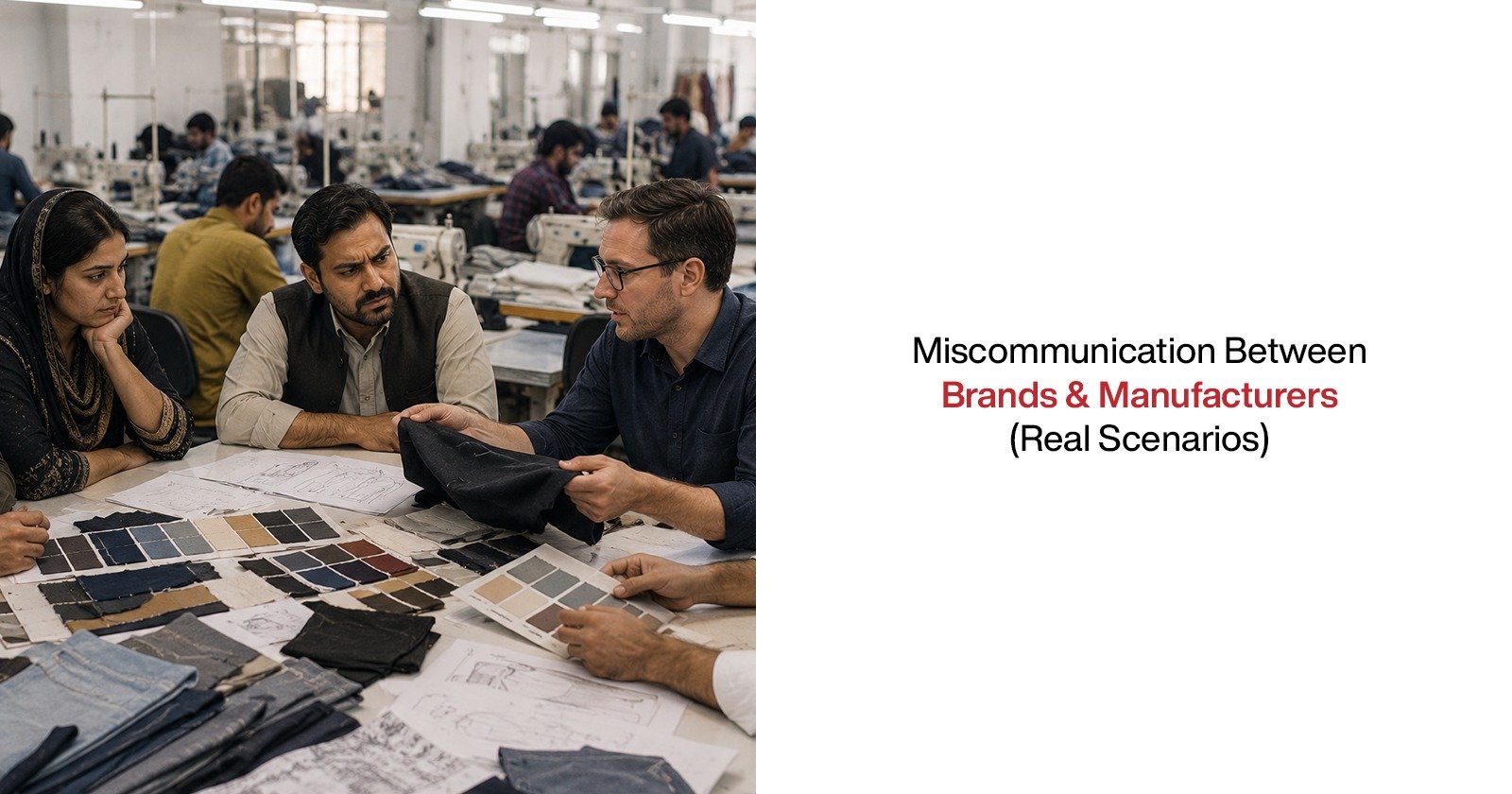
It’s a partnership between a brand and a manufacturer that brings every winning product to life. When it comes to apparel, sportswear, workwear or fashion accessories it is imperative that both parties work together with complete transparency from product development to final delivery. Miscommunication is one of the biggest reasons that production projects fail. Misunderstandings about fabric quality, measurements, delivery timelines or packaging can lead to delayed shipments, rejected orders, financial losses and damaged business relationships.
Many clothing brands assume that manufacturers understand all requirements without the need to document them in detail, whereas manufacturers often have to proceed on the basis of assumptions when the instructions are incomplete. These communication gaps result in costly production mistakes that could have been avoided with good planning and cooperation.
This article discusses the key communication problems between brands and manufacturers with real-world examples and provides practical solutions to avoid them.
Why Communication Matters in Manufacturing
Manufacturing is more than converting raw materials into finished products. Each production order goes through several departments including sourcing, pattern making, sampling, cutting, stitching, quality control, finishing, packaging and shipping.
Each stage requires accurate information. Once one department receives bad instructions, the error often cascades through production, making corrections expensive or impossible.
Good communication leads to consistency, better production efficiency, less waste and helps both parties build long term business relationships.
Scenario One: The Fabric That Was Never Approved
A young clothing brand was looking for high-end heavyweight cotton hoodies for their winter collection. Early discussions with the buyer were verbal with a request for fabric of high quality but GSM, composition or finishing details were never given.
The manufacturer found a cotton fabric that looked similar, but was much lighter than the brand expected. Samples looked fine in online meetings because the difference wasn’t noticeable on camera.
When the bulk shipment came, the brand realized that the hoodies were not the premium feel they had promised their customers. Thousands of dresses were already produced.
It wasn’t a manufacturing problem. That was not total communication.
A detailed tech pack with fabric GSM, composition, shrinkage tolerance, washing process and finishing requirements would have avoided confusion before the start of production.
Scenario Two: Incorrect Size Specifications
Errors in sizing are among the most common disputes in manufacturing.
In one case, a sportswear company sent its manufacturer measurements in one sizing standard, but the factory interpreted the measurements using a different regional measurement system.
The result was an entire production run of medium sized garments that fit like smalls.
The problem was an expensive one to fix as the labels were already printed and the packaging already done.
Every brand should have measurement charts with acceptable tolerance ranges in a variety of sizes, not just Small, Medium, or Large.
The Cost of Assuming vs Confirming
Many production problems occur because each side assumes the other already knows.
- A manufacturer may assume logo placement is consistent with prior orders.
- A purchaser may expect that the packaging will remain the same.
- These assumptions are denied by both sides.
Even the most experienced production partners should verify each order, because product requirements frequently change season to season or collection to collection.
Written confirmations greatly reduce misunderstandings.
Scenario Three: Color Mismatch After Bulk Production
A fashion brand approved a digital colour reference by email instead of asking for physical lab dips.
Colours on a computer screen can be affected by calibration, brightness and the settings of the device.
Thousands of garments were returned in darker shades than expected after production.
The manufacturer had matched the digital reference in technology but the buyer had expected a different look in natural light.
If physical colour swatches had been approved prior to bulk production, the disagreement could have been avoided altogether.
Production Schedules That Were Never Well-Defined
Manufacturing is a deadline-driven industry.
One individual retailer expected product before a holiday sales campaign. The manufacturer was of the opinion that the date of delivery meant only the completion of production and not the departure of the shipment.
Production was finished on schedule, but ocean freight took a few more weeks.
The products were released after the promotional season was over.
In production schedules, every milestone must be clearly identified from sample approval, sourcing of raw materials, start of production, quality inspections, completion of packing, departure of shipping, customs clearance and final delivery.
Communication Gaps Sampling
Brands need to identify problems at the sampling stage before mass production begins.
Unfortunately, some of the buyers check only the appearance of samples and ignore measurements, stitching quality, trims, labels, embroidery placement, washing results and functionality.
Once mass production has begun, changing specifications is costly and difficult.
Thorough sample evaluations can save expensive surprises later on.
Cultural and Linguistic Differences
What global manufacturing generally means is companies working in different countries with different languages and business cultures.
Some technical terms may mean different things in regional manufacturing practices.
For example, words such as “regular fit”, “premium finish” or “soft hand feel” are open to different interpretations, since there are no measurable standards.
Diagrams, photographs, specification sheets and technical drawings reduce the reliance on language alone.
Photos tell you more about what to expect from a product than a thousand-word email.
Packaging Instructions Often Ignored
In many cases, brands are heavily product branding-oriented, but instructions on packaging are often ignored.
The brand wants custom folding, branded polybags, barcode placement, tissue paper or retail-ready cartons, but a manufacturer may pack garments using standard factory methods.
If packaging specifications are communicated after the production process is determined, it is impossible to avoid additional labour and material costs.
Packaging specifications should be complete and included with production orders from the start.
Definition of Quality Expectations
Quality is subjective unless both parties establish standards that can be measured.
One buyer will overlook loose threads, another will turn away any garment with even the smallest flaws.
Manufacturers need quality expectations clearly stated before production begins.”
Inspection criteria should specify acceptable stitching consistency, fabric defects, print alignment, colour variation, measurement tolerance and packaging quality.
Agreed quality standards reduce disputes during final inspections.
The Need for Centralized Communication Systems
Many production projects fail because conversations happen over multiple channels.
- Fabric conversations happen over email.
- Revisions on artwork happen on messaging apps.
- Packaging instructions are provided separately.
- The purchase orders are updated elsewhere.
Critical information becomes scattered, raising the likelihood of missing important revisions.
With centralized documentation, all departments are working from the latest approved specifications.
Long-Term Manufacturing Partnerships Building
Partnerships are based on transparency, responsiveness, and trust between partners.
Instead of changing specs back and forth during production, brands need to have realistic expectations.”
If manufacturers know they may experience delays, they should report them as soon as they know, not when they miss the deadline.
Regular meetings, production updates and documented approvals help both sides solve problems before they get expensive.
Working together, not pointing fingers, is the secret to successful manufacturing relationships.
How TexNex Inc. Is Fixing Manufacturing Miscommunication
One of the best ways to reduce production errors is to work with an experienced sourcing and manufacturing partner who understands both the buyers and the factories.
TexNex Inc. is a Canada-based sourcing & manufacturing company that connects buyers in North and South America with reliable manufacturers in Pakistan. TexNex Inc functions as a communication bridge, assisting brands in translating product requirements into clear manufacturing specifications, coordinating sampling, managing production updates, and ensuring expectations stay aligned throughout the manufacturing process.
Unlike traditional sourcing agencies, TexNex Inc operates on zero commission, creating transparent partnerships for businesses with competitive production costs. Their experience in international manufacturing helps reduce misunderstandings, improve quality consistency and create smoother production flows from concept to shipment.
Conclusion
Major mistakes don’t often start when there’s miscommunication between brands and manufacturers. It often begins with small assumptions, incomplete specifications, unclear approvals, or undocumented changes. As production progresses these small misunderstandings multiply into expensive problems affecting quality, delivery schedules, customer satisfaction and profitability.
The best brands understand that communication is as important as the manufacturing capability itself. The detailed documentation, structured approvals, realistic timelines and ongoing collaboration help build products that meet expectations and stronger long-term manufacturing partnerships.
Frequently Asked Questions
1. What is the biggest cause of manufacturing miscommunication?
The main reason is bad product documentation. Missing details about materials, measurements, colours, packaging or quality standards often result in different interpretations by manufacturers.
2. How do brands minimize production errors?
To avoid these pitfalls, brands need to have a detailed tech pack, sign off on physical samples, document every change, keep all communications in one place, and double check all specs before mass production starts.
3. Why are production samples so crucial?
Production samples are used by brands to verify sizing, materials, colours, construction, branding and overall quality before mass production. Finding problems during sampling is much cheaper than fixing problems in bulk production.
Summary
Miscommunication continues to be one of the leading causes of manufacturing delays, quality problems and lost money. Clear specs, documented approvals, realistic production planning and open communication all help brands and manufacturers work more efficiently together. By making the time to invest in better communication practices, businesses can avoid costly errors and establish long-term manufacturing partnerships that result in steady growth.