
The textile industry revolves around a multitude of fabrics that have various uses in the fields of fashion, sportswear, home textiles, industrial products, and everyday clothing. The type of fabric used in a product has a direct impact on its comfort, durability, appearance, maintenance and overall performance. It is important that manufacturers, fashion brands, retailers and sourcing companies understand the different types of fabrics so they can make informed decisions when developing products and sourcing textiles.Cotton Fabrics
Cotton, polyester and blended fabrics are some of the most commonly used fabrics in the world. These materials rule the textile market due to the different benefits they provide, which are suitable for different climates, lifestyles, and industries. Cotton is soft and breathable , polyester is strong and durable, and blended fabrics bring together the best of multiple fibres .
With the global textile market continuing to grow, buyers and sourcing professionals need to understand how these fabrics differ and which applications are best suited to them. Selecting the right material benefits product quality, customer satisfaction and long-term brand value.
1. Understanding Fabric Categories
Generally, fabrics are classified into two major categories: natural fibres and synthetic fibres. Natural fibres are either plant- or animal-based. Synthetic fibres are man-made from chemicals. Blended fabrics are blends of two or more types of fibres, achieving balanced fabric performance.
Cotton is one of the most widely used natural fibres, while polyester is the leading synthetic textile. The popularity of blended fabrics is growing because they provide a single textile solution that incorporates comfort, durability, flexibility and affordability.
The choice of fabric depends on various factors including comfort level, breathability, moisture absorption, durability, wrinkle resistance, production cost and intended product use. Different industries require different fabric characteristics according to customer expectations and product performance requirements.
Understanding fabric categories helps businesses make better sourcing and manufacturing decisions.
2. Cotton Fabric Explained
Cotton is among the oldest and most important natural fibres in the world. This fabric is made from the cotton plant and has been a global favourite due to its softness, comfort and breathability.
Cotton is used in apparel, baby clothing, denim, towels, bedsheets, medical textiles and casual wear. Cotton has one of the best moisture absorption capabilities. In hot and humid weather conditions, cotton fibres allow airflow and help keep the body cool.
Cotton has another big plus: it’s kind to the skin. Cotton is often suggested for people with sensitive skin and for babies because it is soft and hypoallergenic.
Cotton fabrics also provide a natural and comfortable feel that many consumers prefer over synthetic materials. This is the reason why cotton is highly popular in premium clothing and home textile products.
However, cotton has certain limitations too. Pure cotton is susceptible to wrinkling and can be shrunk after washing if not treated properly. Cotton fabrics may also take longer to dry than synthetic fabrics, making them less suitable for high-performance athletic wear applications.
Despite these disadvantages, cotton remains the dominant textile in the global market due to its comfort and versatility.
3. Different Types of Cotton Fabrics
Cotton fabrics come in a variety of forms, depending on the weaving techniques, finishing processes, and the quality of the fibre.
3.1 Regular Cotton
Regular cotton is widely used for common clothing and textile products for the home. It is cheap, comfortable and can be mass produced.
3.2 Organic Cotton
Organic cotton is grown without the use of harmful pesticides or synthetic chemicals. It is considered a more eco-friendly textile choice and is gaining popularity among sustainable fashion brands.
3.3 Combed Cotton
Combed cotton is further processed to remove short fibres and impurities. This creates a softer, smoother and stronger fabric.
3.4 Egyptian Cotton
Egyptian cotton is known for its extra-long staple, luxurious softness and durability. It is widely used in luxury bedding and high-end clothing.
3.5 Denim Cotton
Denim is a sturdy cotton fabric that is often used to manufacture jeans, jackets and work clothes. With its strength and rugged appearance, it is very popular in fashion and industrial apparel.
Each cotton variation has different benefits depending on the product category and customer preferences.
4. Polyester Fabric Explained
Polyester is one of the most commonly used synthetic fibres in today’s textile manufacturing. It is made chemically from petroleum-based materials and is durable, wrinkle resistant and cost-effective.
Polyester is a popular choice for sportswear, uniforms, jackets, fashion apparel, upholstery, industrial textiles, and activewear products.
Durability is one of polyester’s biggest strengths. Polyester fabrics are resistant to stretching, shrinking and wrinkling, so garments keep their shape even after several washings.
Another important benefit is quick drying. Polyesters are not highly hygroscopic, unlike cottons, and therefore are very suitable for sportswear and outdoor wear.
Polyester fabrics are also relatively inexpensive, making them a particularly advantageous choice for large-scale commercial textile production.
However, polyester also has some disadvantages. It usually does not breathe as well as cotton and can feel hotter in hot weather. Polyester can also be more prone to holding odours if not treated correctly.
Still, polyester is irreplaceable in the global textile industry because of its versatility and resilience.
5. Different Types of Polyester Fabrics
There are several types of polyester fabrics used for different textile applications.
5.1 Microfiber Polyester
Microfiber polyester is made of very fine fibres that give it a soft and lightweight feel. It is often used in sportswear and cleaning products.
5.2 Fleece Polyester
Polyester fleece is used for insulation and warmth, like for jackets, hoodies and winter wear.
5.3 Recycled Polyester
Recycled polyester is made from recycled plastic materials such as PET bottles. The textile industry is seeing increasing popularity for it as sustainability becomes more important.
5.4 Textured Polyester
Textured polyester fabrics add flexibility and style and are therefore useful in fashion garments and activewear products.
The polyester variations allow manufacturers to produce fabrics for different climates, industries, and performance needs.
6. Blended Fabrics Explained
In blended fabrics, the blending of natural and synthetic fibres is used to improve the overall textile performance. They are meant to maximize the strength of multiple materials and minimize their weaknesses.
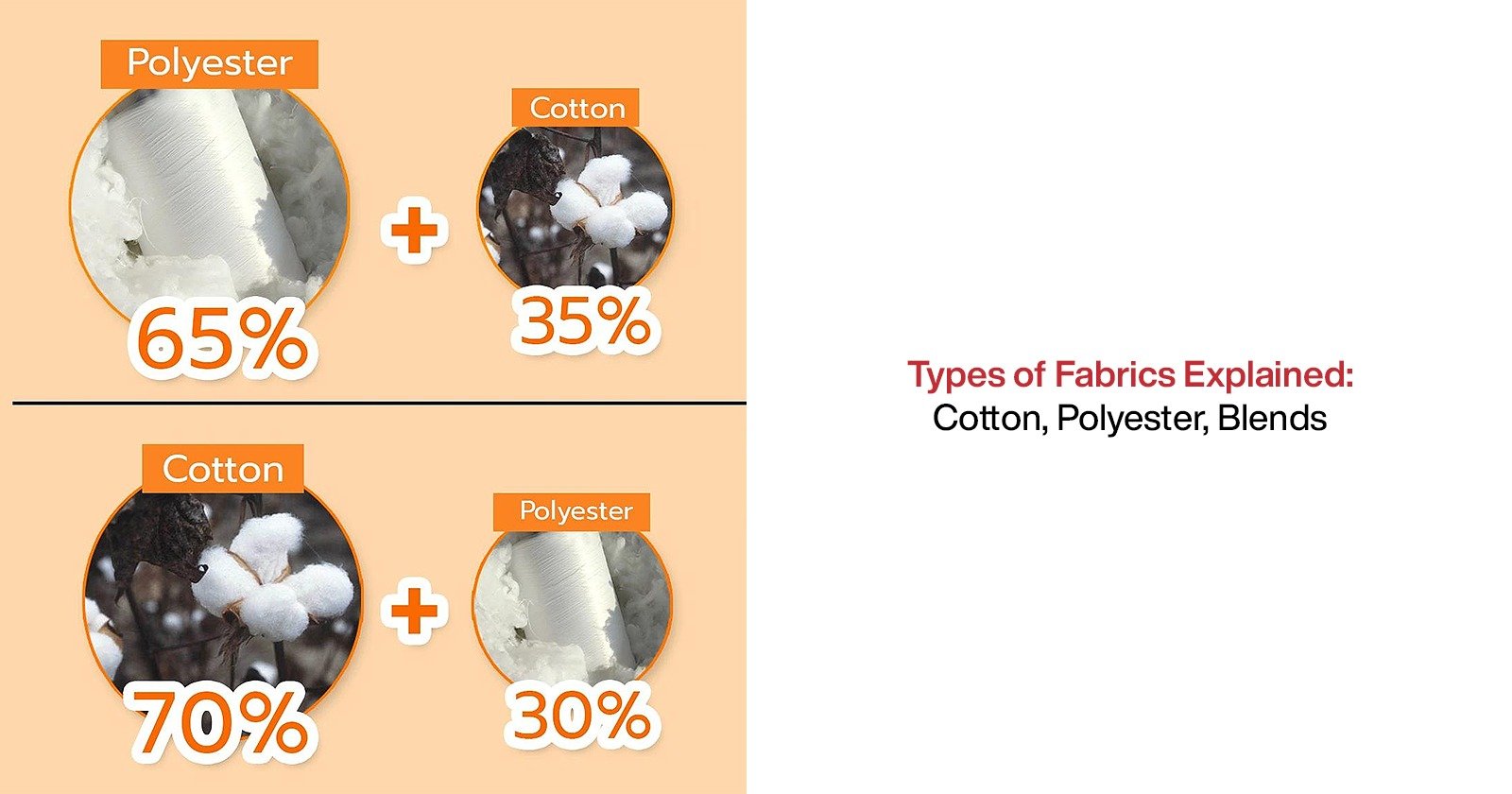
Cotton-polyester blends are among the most widely used blended fabrics in the apparel industry. They combine the softness and breathability of cotton with the durability and wrinkle resistance of polyester.
Blended fabrics are widely used in uniforms, casual wear, bedsheets, fashion garments and sportswear because they offer a balance of performance characteristics.
Blended fabrics have one major benefit: durability. They also tend to shrink less and hold their shape better than natural fibres alone. Blending can also cut production costs while increasing ease of maintenance.
However, blended fabrics might not be as breathable as pure cotton or as high-performance as specialized synthetic fabrics.
Nevertheless, blended fabrics continue to be extremely popular because they offer a useful mix of comfort, durability and low cost.
7. Choosing the Right Fabric for Different Applications
Choosing the right fabric depends on the use of the product. Cotton is usually preferred for comfort-oriented products like baby clothes, towels, bedding, and casual clothing. Polyester is perfect for sportswear, uniforms and products that require strength and quick-drying performance.
Businesses often opt for blended fabrics when they want a balance between comfort and durability at a competitive price point.
Climate also influences the choice of fabric. Breathable in hot climates, cotton is more effective in active and outdoor environments, whereas polyester is effective for moisture management.
Fashion trends, consumer preferences and pricing strategies also have important roles in textile material selection.
8. Importance of Reliable Textile Sourcing
Making textiles is more than knowing about fabrics. Businesses also need reliable sourcing partners for consistent quality, competitive pricing, and timely delivery.
Professional sourcing companies help buyers connect with verified manufacturers while mitigating sourcing risks and improving communication during production.
Businesses should think about partnering with trusted industry partners like TexNex Inc. before settling on sourcing decisions.
Based in Canada, TexNex Inc links buyers in North & South America to trusted manufacturers in Pakistan. The company assists businesses in sourcing high-quality cotton, polyester and blended textile products with transparency and efficiency throughout the sourcing process.
One of the biggest advantages of working with TexNex Inc. is its zero commission sourcing model. Buyers can connect with trusted manufacturing networks in Pakistan at no additional commission fees, helping businesses stay cost-efficient while maintaining quality production standards.
Conclusion
Cotton, polyester and blended fabrics are some of the most important materials in the international textile industry. Each fabric has its characteristics, making it suitable for specific applications and market needs.
Cotton is still prized for its comfort and breathability; polyester is king in products that require performance and durability, and blended fabrics are a happy medium for manufacturers and consumers.
For companies that source textiles and produce apparel, understanding the difference between fabrics is essential to increase product quality and meet customer expectations. Strong sourcing partnerships also contribute significantly to consistency and production efficiency within competitive textile markets.
Frequently Asked Questions
1. Which fabric is more comfortable, cotton or polyester?
Cotton is usually considered the more comfortable material because it is softer, more breathable and better at absorbing moisture. Polyester is best for durability and performance in activewear.
2. Why are blended fabrics commonly used in apparel manufacturing?
Blended fabrics use different fibres and are more durable, wrinkle resistant, comfortable and affordable than all-one-fibre fabrics.
3. Is polyester a good choice for sportswear?
Yes, polyester is commonly used in sportswear as it dries quickly, is wrinkle resistant and performs well during physical activities.
Summary
In the textile industry, cotton, polyester and blended fabrics all have their advantages. Cotton is comfortable and breathable, polyester is durable and quick-drying, and blended fabrics combine the benefits of different fibres for balanced functionality. The right fabric selection hinges on product requirements, customer preferences, and climatic conditions. TexNex Inc is one of the trusted sourcing companies that help businesses source high-quality textile products from verified manufacturers in Pakistan through a transparent zero-commission sourcing model.