
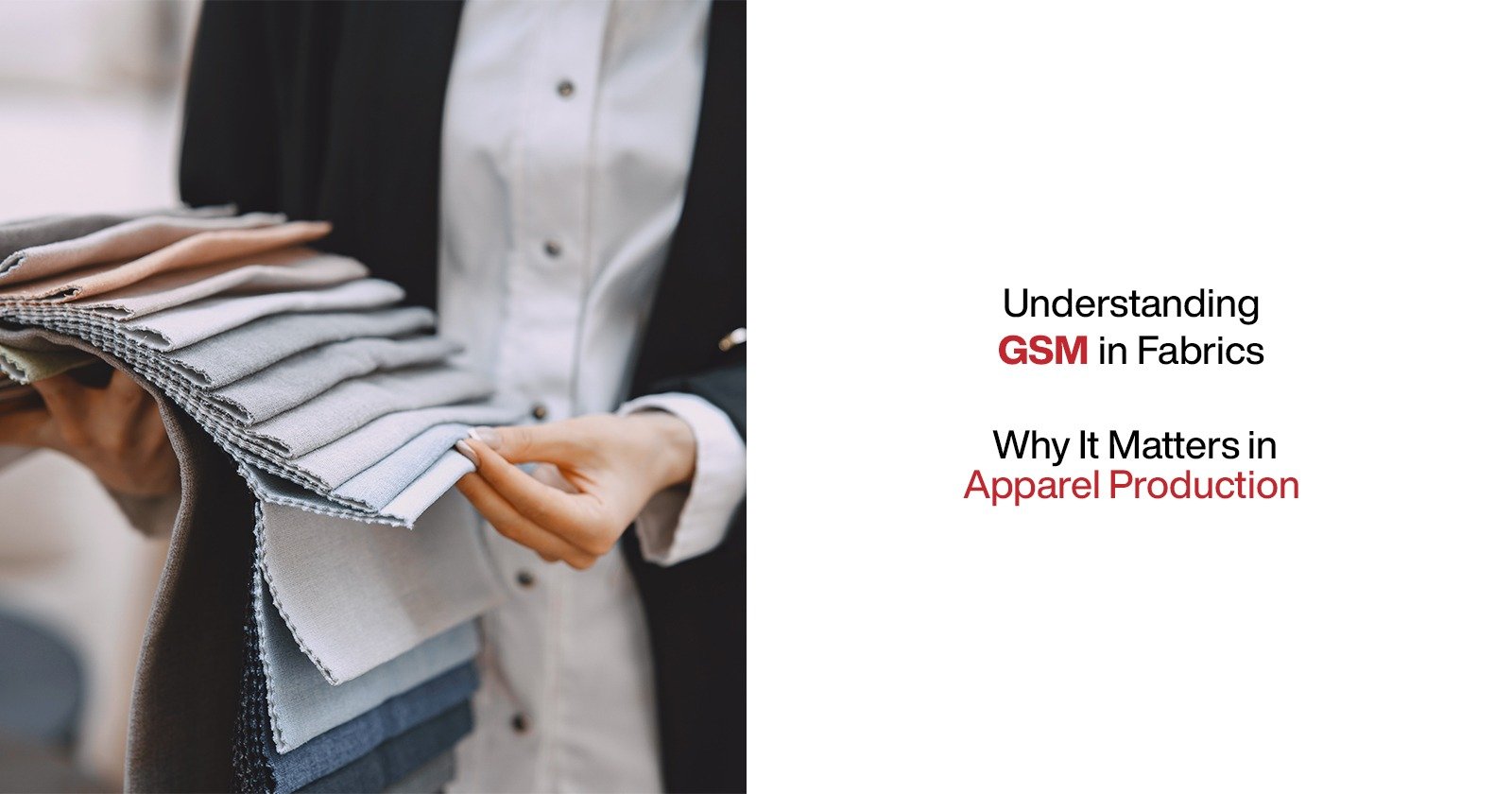
Choosing the right fabric is one of the most important choices in the clothing business since it affects the quality, comfort, durability, and cost of the product. GSM is one of the most important technical terminologies used in the textile industry. GSM is an important number that affects how a piece of clothing looks, feels, works, and lasts. Designers, producers, sourcing managers, and buyers who work in the clothing industry need to know what GSM is.
What Is GSM in Fabrics?
GSM is short for Grams per Square Meter. It tells you how heavy a piece of cloth is across an area of one square meter. GSM is a simple way to say how heavy or light a piece of cloth is.
A fabric with a lower GSM is usually lighter, thinner, and more breathable. A fabric with a greater GSM is usually heavier, thicker, and more durable. GSM doesn’t immediately tell you how good a fabric is, but it does have a big effect on how the fabric behaves, how it may be used, and how well it works for its intended purpose.
A 120 GSM cotton fabric, for instance, feels light and airy, making it great for summer shirts. A 300 GSM fabric, on the other hand, feels heavy and thick, which is why it is often used for hoodies or sweatshirts.
Why GSM Matters in Apparel Production
1. Determines Fabric Weight and Drape
The way a cloth drapes on the body is directly affected by its GSM. Lightweight fabrics with lower GSM values hang well and feel smooth, which makes them great for dresses, blouses, and casual clothes. Heavier textiles with higher GSM values provide shape and volume, which is crucial for coats, outerwear, and winter clothes.
Picking the incorrect GSM might make clothes that don’t fit well or don’t look like what you wanted them to.
2. Impacts Comfort and Breathability
GSM is a big part of making clothes that are comfortable, which is a primary goal. Fabrics with a lower GSM let more air through, which makes them good for warm weather and sportswear. Higher GSM textiles keep you warm and insulated, which is important in colder places.
Brands who make clothes for worldwide markets need to use GSM that works with the weather in each location and what customers want.
3. Influences Durability and Longevity
Fabrics with a higher GSM are usually stronger and less likely to wear out. This is why work clothes, jeans, and cold clothes generally employ textiles with a higher GSM. Lightweight materials may be more comfortable, but they might wear out faster if you don’t utilize them well.
When you balance GSM with the kind of fabric, clothes will keep their form, strength, and look even after being worn and washed several times.
4. Affects Cost and Pricing Strategy
GSM has a direct effect on the cost of making and using cloth. Fabrics with a higher GSM need more raw materials per square meter, which raises the cost of making them. Even a tiny change in GSM may have a big effect on the total cost of making clothes on a large scale.
Manufacturers and brands need to choose GSM values that fulfill quality standards and are still good for business.
5. Defines Seasonal Suitability
GSM fluctuation is quite important for seasonal collecting. textiles with a weight of 100 to 160 GSM are common in summer collections, whereas textiles with a weight of 240 GSM or more are used in fall and winter collections. Most of the time, transitional clothes are in the mid-GSM range.
Choosing the right GSM makes sure that clothes work properly all season long.
Common GSM Ranges & Their Applications
GSM needs are different for each kind of fabric, but here are some fundamental rules that clothing makers follow:
- 80–120 GSM: Very light fabrics like chiffon, voile, and fine jersey are great for summer clothes.
- 120–180 GSM: Fabrics that are light to medium weight and are often used for T-shirts, casual shirts, and dresses.
- 180–240 GSM: Medium-weight textiles that are good for polo shirts, pants, and light sweaters.
- 240–320 GSM: Heavy materials used for coats, hoods, and other winter clothes.
- 320+ GSM: Very thick materials for jackets, outerwear, and work clothes.
These ranges enable producers make things the same way every time and across collections.
GSM vs Fabric Thickness: Clearing the Confusion
A lot of people think that a higher GSM necessarily indicates thicker fabric. GSM and thickness are not the same thing, however they are commonly related. Two textiles with the same GSM may feel different because of the kind of fibre, the way the yarn is made, and the way it is woven or knitted.
For example, a fabric that is tightly woven and a fabric that is loosely knitted may have the same GSM number but feel and work quite differently. This is why you should always look at GSM and how the cloth is made at the same time.
Quality Control & GSM Consistency
For making clothes, it’s very important to keep GSM the same throughout all fabric batches. Changes in GSM may make clothing sizes, fits, and looks different from one another. To make sure GSM is correct, reliable manufacturers use strong quality control methods, particularly for big orders.
Working with experienced sourcing partners lowers the risk of GSM deviation and manufacturing problems for customers from other countries.
TexNex Inc – Connecting Global Buyers with Trusted Manufacturers
Before we finish, let’s talk about TexNex Inc, a firm that helps fill in the gaps in the garment industry’s sourcing process. TexNex Inc, which is based in Canada, links customers in North and South America with trustworthy producers in Pakistan.
TexNex Inc helps consumers find clothes and textiles that fulfill precise technical criteria by having a deep grasp of textile characteristics including GSM, fabric structure, and manufacturing standards. Their network across continents makes sure that quality is the same, communication is clear, and supply chain management is quick. This makes them a great partner for firms that need reliable manufacturing solutions.
Conclusion
To make smart choices in clothing manufacture, you need to know what GSM is. GSM affects almost every part of a garment’s performance and commercial success, from how comfortable it is to how long it lasts to how much it costs and how well it fits in with the seasons. GSM should not be looked at alone, but it is a basic measurement that helps choose fabrics and create new products.
Apparel firms may make sure that their goods exceed both functional and commercial objectives by working with professional sourcing partners and quality-focused producers that know GSM.
Frequently Asked Questions (FAQs)
1. Is higher GSM always better quality?
No, a higher GSM doesn’t always guarantee greater quality. The best GSM for a piece of clothing depends on what it is for, what it is made of, and how it will be used.
2. Can GSM change after washing?
Yes, little alterations may happen when the cloth shrinks or relaxes, particularly if it wasn’t adequately pre-treated.
3. Is GSM the same for woven and knitted fabrics?
The way to measure GSM is the same, but it acts differently in woven and knitted textiles since they are made differently.
Summary
GSM (grams per square meter) is an important number in making clothes that tells you how heavy, comfortable, durable, and expensive the fabric is. Choosing the proper GSM makes sure that clothes work well in all seasons and markets. Brands can get consistent quality and efficient worldwide manufacturing when they work with dependable sourcing partners like TexNex Inc.