
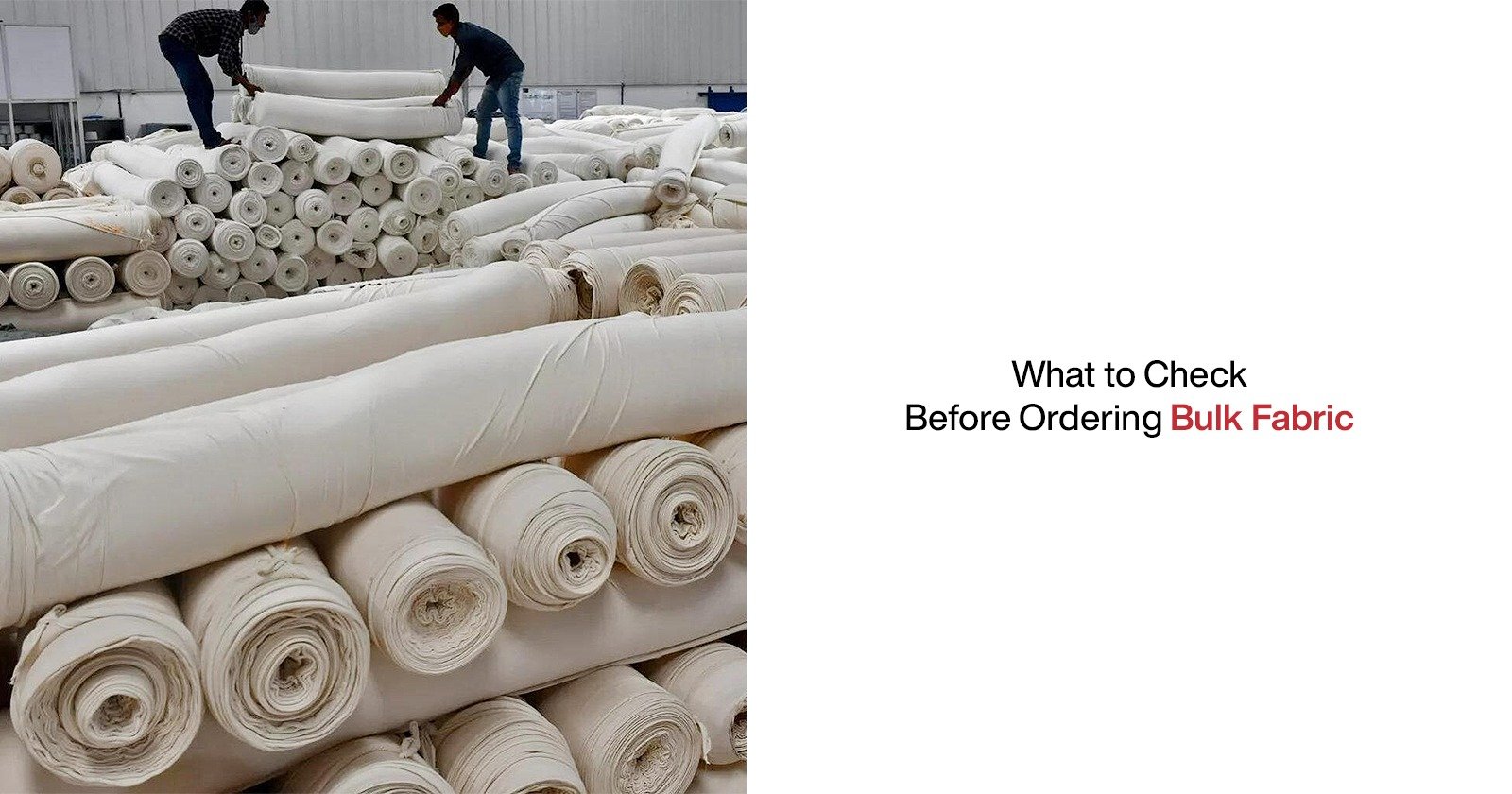
For clothing brands, textile companies, fashion startups and manufacturers, purchasing fabric in bulk is a huge financial commitment. If you are sourcing fabric for apparel production, home textiles, sportswear or commercial use, making the wrong decision can lead to production delays, quality issues, customer complaints and lost revenue.
Many companies think only about price when buying fabrics in bulk but shrewd buyers know that there is more to fabric sourcing than just price. Successful production depends on a number of factors, including fabric quality, its consistency, shrinkage, colour accuracy, certifications and the reliability of the supplier.
This guide will walk through the most critical things a business needs to check before ordering fabric in bulk so they can avoid fabric-sourcing problems and create a more dependable supply chain.
1. Understand the Fabric Requirements Clearly
The first step a business must take before ordering fabric in bulk is to determine exactly what fabric it needs. Each product needs different fabric properties depending on its purpose, its target audience and its manufacturing process.
For example, fabrics used for sportswear should be stretchable and moisture absorbent, while home textiles should be durable and soft. Texture, look and drape quality are often important factors in fashion garments.
Before contacting suppliers, buyers must know the fabric composition, GSM (grams per square meter), width, colour requirements, finishing details and intended use. Clear specifications help the manufacturer to understand your expectations and avoid the risk of receiving unsuitable material.
A clearer definition of the requirement also renders communicating suppliers more professional and efficient.
2. Check Fabric Composition and Material Quality
The fabric composition directly affects the product performance, comfort, durability and customer satisfaction. Buyers should be careful about the fibre content before bulk buying.
Common fabric materials include cotton, polyester, viscose, linen, fleece, spandex and blended fabrics. Every material has different properties, advantages and limitations.
For example, cotton is soft and breathable, but polyester is durable and resistant to wrinkles. Blended fabrics provide the benefits of multiple fibres for improved performance.
Businesses should ask suppliers for the fabric specs, including fibre percentages and the manufacturing process. This knowledge of the exact composition helps ensure that the fabric meets your product requirements and quality standards.
3. Request Fabric Samples Before Bulk Production
One of the biggest mistakes businesses make is to order fabric in bulk without testing samples first. Fabric samples allow you to evaluate the material before making a larger financial commitment.
Test the sample thoroughly for softness, stretch, texture, thickness, colorfastness and total hand. Companies should also test how the fabric reacts to washing, ironing, printing, embroidery or stitching.
Testing fabrics can reveal potential problems like excessive shrinkage, colour bleeding, or poor durability prior to the start of production. Good vendors will normally send you sample swatches or sample yardage for you to look at.
Sampling takes longer, but it greatly reduces the risk of expensive production problems later on.
4. Evaluate Fabric GSM and Weight
GSM (grams per square meter) is also a critical measurement that determines the thickness and weight of the fabric. Fabric weight has a direct bearing on product quality, comfort, durability and appearance.
Lightweight fabrics are popular for summer clothes and activewear, while heavier fabrics are used for jackets, hoodies, upholstery and winter wear.
Buyers should verify the exact GSM requirements with the supplier and ensure consistency across the entire production batch. Inconsistent GSM can cause problems in the garment manufacturing process and can negatively impact the final product.
Professional manufacturers might be able to deliver exact GSM specifications and uniformity in production.
5. Check Color Accuracy and Dye Consistency
When you’re ordering fabric by the bolt, colour consistency is key. This is especially true for fashion brands and private label businesses. Small colour differences between fabric lots can lead to big production and branding problems.
Businesses should ask for lab dips or colour swatches before approving production. Lab dips are a way for buyers to check the accuracy of the colour in different types of light.
It is important to discuss dyeing methods and colorfastness with the supplier. Poor quality dye could fade, bleed or be unevenly coloured after washing.
Good fabric manufacturers have strict dyeing and quality control procedures to ensure homogeneity across large quantities.
6. Test Shrinkage and Fabric Performance
One of the most common problems in textile manufacturing is shrinkage. Some fabrics shrink a lot in the wash or when heated, which can affect the fit of garments and customer satisfaction.
Businesses should test shrinkage on samples before ordering bulk fabric. Wash the fabric in the washing machine as you would normally wash it. Once washed, measure the fabric to see if it has changed size.
Buyers should consider not only shrinkage but also how the fabric performs, such as stretching, pilling resistance, wrinkle resistance and durability. These tests are performed to test whether the fabric will last with normal use and still keep its quality.
Reliable suppliers will often provide technical test reports to back up their fabric claims.
7. Verify Supplier Certifications and Compliance
Fabric quality is as important as the credibility of the supplier. Companies should ensure the manufacturer is following recognized quality and ethical standards of production.
Most professional textile manufacturers have ISO, OEKO-TEX, GOTS, WRAP or BSCI certifications. The certifications demonstrate compliance with international standards for quality, safety and environment.
Compliance is particularly important for companies that sell in international markets, where most retailers and distributors demand certified materials.
Working with certified suppliers reduces sourcing risks and improves supply chain reliability.
8. Understand Minimum Order Quantities and Lead Times
Businesses should talk through minimum order quantities (MOQs) and production lead times before placing a large order for fabric.
Some manufacturers are geared to high-volume production and may not take small orders. Some may offer flexibility for startups and growing brands.
Lead times are also critical as production delays can impact inventory planning, seasonal launches and customer deliveries. Buyers are required to verify manufacturing times, shipping schedules and production capacity before placing orders.
Clear expectations regarding timelines avoid misunderstandings during production.
9. Review Pricing and Hidden Costs
Fabric pricing should always be scrutinized carefully. Cheaper fabrics often compromise on quality or consistency, so buyers should not only look at the lowest price.
Instead, firms should weigh price with quality standards, supplier reputation and production reliability. Could you please provide me with a complete quote with fabric cost, dyeing charges, packaging expenses, shipping costs and payment terms?
If upfront discussion doesn’t occur, hidden costs can inflate the total sourcing budget significantly. Clear pricing helps businesses to plan better and avoid unexpected financial problems.
10. Inspect Packaging and Shipping Standards
Packaging is essential for protecting fabric during transport. Poor packaging can leave fabrics exposed to moisture, dust, wrinkles and damage during transit.
Businesses need to discuss packaging standards with suppliers before shipping. Professional manufacturers use safe wrapping, protective covering, labelling systems and organized fabric rolls to maintain product quality during the transit.
It is also important to check shipping methods, documentation requirements and logistics arrangements, particularly for international orders.
Good shipping management ensures that fabrics arrive on time and in good condition.
TexNex Inc – Simplifying Textile Sourcing for Global Buyers
TexNex Inc. is a company devoted to connecting buyers throughout North and South America with trusted manufacturers in Pakistan. This service is something that companies looking for trusted fabric sourcing solutions can benefit from.
TexNex Inc. is a Canada-based company that helps businesses to source quality textile products and fabrics from experienced Pakistani manufacturers known for their strong production capabilities and competitive pricing.
One of the major advantages of working with TexNex Inc is their zero-commission model, which gives buyers and manufacturers the ability to work directly without unnecessary intermediary fees. The transparency in sourcing allows companies to reduce costs and still maintain a high standard of communication and production quality.
TexNex Inc. brings together the textile manufacturing expertise of Pakistan and the North American proximity to create efficient and dependable textile supply chains for businesses.
Conclusion
It takes careful planning, testing, and supplier verification to order fabric in bulk. Before making big purchases, businesses should consider the fabric composition, GSM, colour consistency, shrinkage, certifications, pricing, and the reliability of the supplier.
A robust sourcing strategy can help businesses to maintain consistent product quality, high customer satisfaction and low production risks. Investing the time to double-check every part of the fabric order can help avoid costly mistakes and promote long-term business growth.
FAQs
1. Why is fabric sampling important before bulk ordering?
Fabric samples help buyers assess quality, texture, colour consistency, shrinkage and durability before ordering large amounts. This minimizes the risk of production problems and financial losses.
2. What does GSM mean in fabric sourcing?
GSM means grams per square meter and is a measure of fabric weight and thickness. Fabrics with a higher GSM count are heavier and more durable; fabrics with a lower GSM count are lighter and more breathable.
3. How can I identify a reliable fabric supplier?
Fabric suppliers that are reliable will usually provide certifications, clear communication, samples of the quality, consistent production standards and clear pricing structures. Positive reviews and experience exporting are also good signs of credibility.
Summary
Before placing bulk fabric orders, companies should consider fabric quality, fabric composition, GSM, colour consistency, shrinkage, supplier certifications, pricing and shipping standards. Fabric sampling and supplier verification are critical to minimizing sourcing risks and establishing trusted production. TexNex Inc. is a transparent, zero-commission sourcing platform connecting buyers across North and South America with trusted manufacturers in Pakistan.